When you purchase through links on our site, we may earn a commission. Here’s how it works.
When you see an oily or milky film collecting on the surface of your aquarium, it typically indicates one of three conditions: protein buildup, biofilm, or true oil residue. Each looks slightly different and forms for various reasons, but all of them interfere with surface gas exchange and can reduce oxygen levels for your fish.
This guide breaks down the most common causes of aquarium surface films, how to identify which one you’re dealing with, and the fastest ways to remove it. You’ll also learn when oily films become dangerous and how to prevent them from returning.
Table of Contents
What That Oily Or Milky Film Actually Is
Surface films in aquariums often get labeled as biofilm, but that term is used loosely in the hobby. In reality, film on the water’s surface can come from three different sources: dissolved organics (protein film), bacterial growth (biofilm), or external contamination (oil film).
They look similar at first glance, but each forms for different reasons and responds to different fixes. Identifying the type you have will help you remove it faster.
1. Protein Film (Most Common)
Protein film is a thin layer of dissolved organic compounds (DOCs) that collect where water meets air. It is not bacterial by itself, but it can eventually feed bacterial growth if left unchecked.
Appearance
- Thin, dull gray or tan sheen
- Breaks instantly when surface is disturbed
- Often reforms quickly without improving flow or reducing organics
Typical Causes
- Overfeeding or oily foods
- Weak surface agitation
- Organic waste buildup (uneaten food, fish waste, plant decay)
Watch: Here’s what real-life protein film looks like. Notice how the surface layer breaks immediately when disturbed — a hallmark of protein film (not oil slick or thick biofilm).
Why it matters: Protein film reduces gas exchange at the water’s surface, which can lower oxygen levels, especially in heavily stocked or low-flow tanks.
2. Biofilm
Biofilm is a natural bacterial layer found in every healthy aquarium. It forms on glass, driftwood, substrate, and filter media, and its presence is a normal sign that beneficial bacteria are established.
In tanks with very low surface movement, it can extend across the water’s surface and create a visible layer.
Appearance
- Milky, cloudy, or slightly translucent surface “skin”
- Thicker and more cohesive than protein film
- Slimy texture
Typical Causes
- Bacterial blooms during cycling
- Fresh driftwood releasing organics
- New-tank cycling or instability
Watch: Notice the thick sheet of biofilm and how it holds together initially when touched.
Why it matters: A light amount of biofilm is normal and even healthy. Thick surface layers, however, can limit gas exchange and indicate instability in young tanks.
3. Oil Film
Oil film comes from external oils or residues entering the water. These hydrophobic substances spread across the surface quickly and do not disperse easily.
Appearance
- Rainbow-colored sheen or glossy surface layer
- Doesn’t disperse easily when touched
- May have a noticeable oily smell
Typical Causes
- Lotions, soaps, sunscreen, or natural skin oils
- Contaminated maintenance tools (nets, buckets, tubing)
- Aerosol sprays or cooking oils drifting into the tank
Watch: Here’s a real-world clip showing a rainbow sheen on the water surface. Note how the creator mentions fish stress — classic signs of an oil film, even though it’s labelled “biofilm” in the video.
Why it matters: Oil slicks block gas exchange more significantly than protein film or biofilm and can irritate surface-breathing fish like Bettas and Gouramis.
Surface Film Identification Chart
Use this chart to quickly determine which type of film you’re dealing with and jump to the right fix.
| Type Of Film | How It Looks | Most Likely Causes | Risk Level |
|---|---|---|---|
| Protein Film | Thin, gray/tan sheen; breaks into swirls when disturbed | Weak surface agitation, organic waste buildup | Low to Moderate (mild oxygen restriction; mostly cosmetic) |
| Biofilm | Milky, cloudy “skin” across the surface; thicker than protein film | Bacterial bloom, new tank cycle, fresh driftwood | Low to Moderate (normal in healthy tanks; only a concern if surface layer becomes thick) |
| True Oil Residue | Rainbow-colored sheen; does not disperse easily; may have oily smell | Lotions/oils from hands, contaminated tools, aerosols/cooking oils | Moderate to High (blocks surface gas exchange; can irritate surface-breathing fish) |
Are These Surface Films Dangerous?
Most surface films are low risk at first, but they can become a problem if they grow thick enough to block gas exchange at the water’s surface. Fish rely on that thin oxygen-rich layer, so anything that interferes with it can cause stress over time.
Here’s how each type affects your tank:
Protein Film
Usually cosmetic, but can reduce oxygen exchange in low-flow tanks. Symptoms include mild surface breathing, lethargy, and fish staying near the filter outlet where oxygen levels are highest.
Biofilm
A thin layer is normal in healthy tanks. Thick surface sheets, however, can trap CO₂ and irritate sensitive species. It may also indicate cycling instability.
Oil Film
The highest-risk type. Oil slicks can significantly block gas exchange and irritate labyrinth fish that breathe at the surface. Immediate removal is recommended.
If you observe rapid breathing, surface gasping, or fish clustering at the surface, address the film and increase surface agitation immediately.
Common Causes Of Surface Films (Ranked By Likelihood)
Not all surface films form for the same reason. Here are the most common causes ranked from most likely to least likely, based on real-world aquarium behavior.
1. Overfeeding & Oily Foods (Most Common Cause Of Protein Film)
Even small amounts of uneaten food dissolve into DOCs. These hydrophobic organics rise to the surface and form a thin protein film, especially in tanks with slow surface movement.

Signs this is the cause:
- Film returns within a day of feeding
- Surface breaks instantly when disturbed
- Fish are fed high-fat or oily foods (pellets, frozen foods, freeze-dried foods)
Why it matters: DOCs accumulate fast, and protein film is usually the first symptom before cloudiness or ammonia issues appear.
2. Weak Surface Agitation (Major Contributor To All Film Types)
Still water encourages the formation of protein films, biofilm, and even oil films to spread unchecked. Without proper surface movement, nothing breaks up accumulating organics or promotes gas exchange.
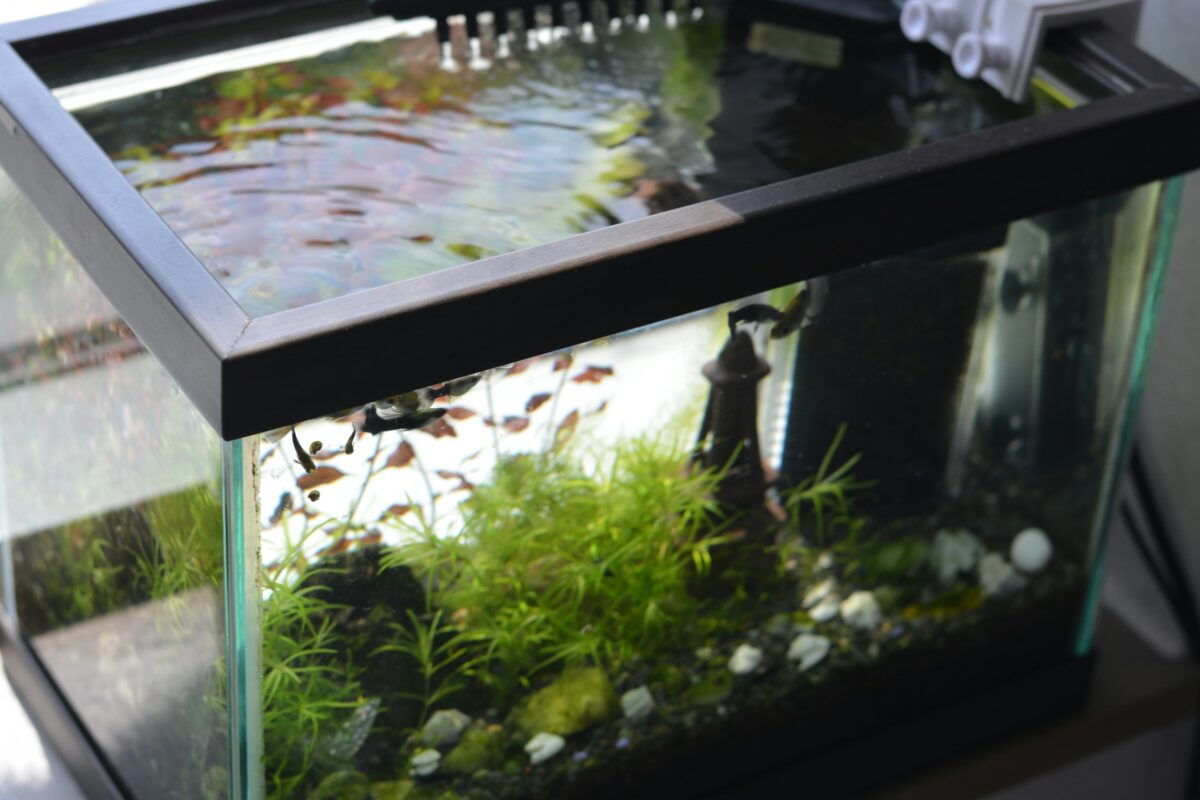
Signs this is the cause:
- Gentle ripples but no real disturbance at the surface
- Water level sits too high under the filter outflow
- Surface “sticks” to your finger when touched
Why it matters: Once surface agitation improves, most films disappear quickly.
3. Organic Waste Buildup (Protein Film + Biofilm Trigger)
Uneaten food, fish waste, dead plant matter, and general detritus all break down into DOCs. High organic load = ideal conditions for protein film and biofilm formation.
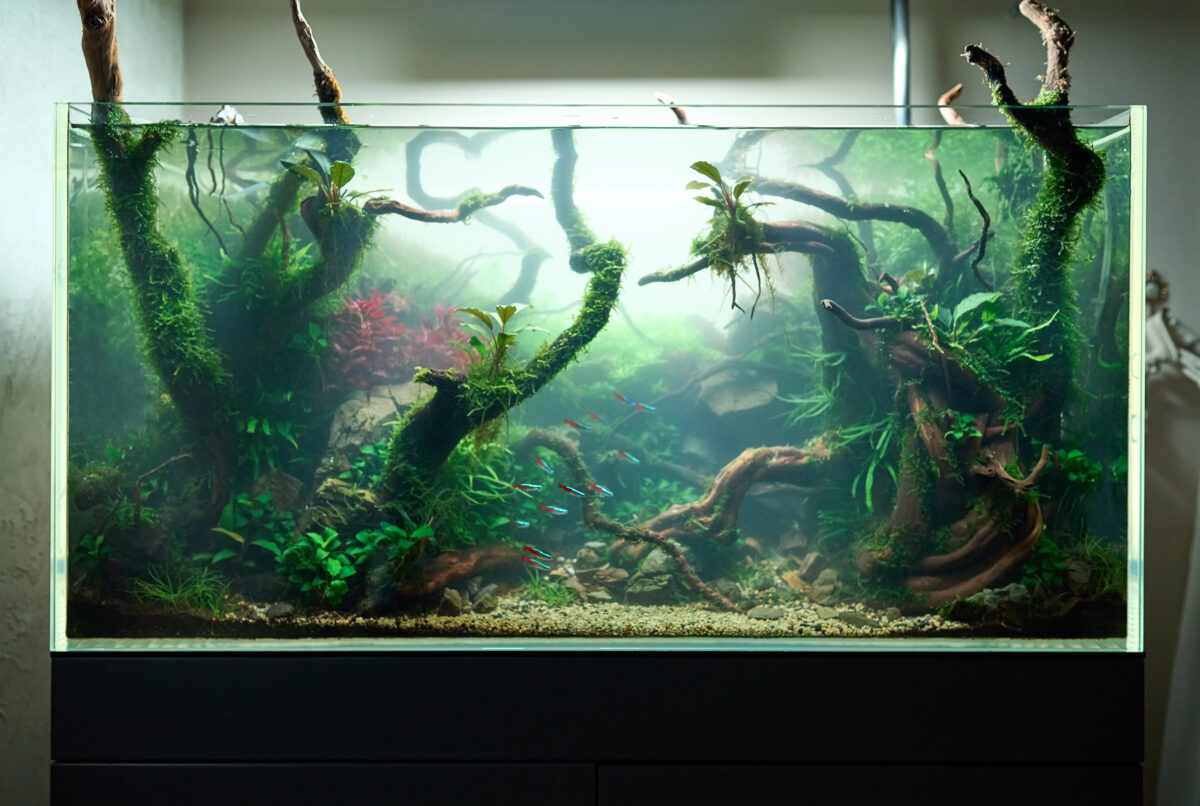
Signs this is the cause:
- Older substrate that hasn’t been vacuumed
- Cloudy water or “dust” on the surface
- Biofilm forming on glass, driftwood, or decorations
Why it matters: If waste sits in the tank long enough, bacteria multiply. This is where thick surface biofilm often starts.
4. Tank Instability & Bacterial Imbalance (Biofilm Trigger)
During the nitrogen cycle — or when beneficial bacteria are disrupted — bacterial populations can surge. This sometimes leads to surface biofilm, especially in low-flow tanks.
Signs this is the cause:
- New tanks (< 8 weeks old)
- Deep clean or filter maintenance recently done
- Driftwood has been newly added
- Biofilm appears as a milky layer across the surface
Watch: This clip shows a thick surface biofilm. While we cannot see the underlying cause in the video, this type of film commonly appears in tanks that are still cycling or have recently experienced bacterial disruption.
Why it matters: This type of film typically resolves over time and with proper pacing.
5. External Oils From Hands, Lotions, Or Tools (Oil Film)
True oil films form when hydrophobic substances enter the tank from outside sources.

Signs this is the cause:
- Rainbow sheen
- Glossy surface that does not break easily
- Recently put hands/arms into tank
- Used a net or bucket that wasn’t fully rinsed
Why it matters: Oil blocks gas exchange more aggressively than protein film or biofilm.
6. Environmental Contamination (Oil Film)
Airborne oils from cooking, candles, diffusers, or spray products can settle on the water surface and create a true oil film. This often appears as a rainbow sheen that spreads easily and does not break apart with a touch.

Signs this is the cause:
- Tank is in a kitchen or near a stove
- Candle, wax melt, or diffuser used in the same room
- Hair spray, furniture sprays, or cleaning sprays used nearby
- Film returns even when food and flow are corrected
Why it matters: Oil film blocks gas exchange more aggressively than protein film or biofilm. Removing the contamination source is essential. By choosing the right place to put your aquarium before setting it up avoids problems like this.
7. Decaying Fish Or Hidden Organic Events (Fast Biofilm + Protein Film Trigger)
A dead fish, dying snail, or sudden mass of rotting organic material can spike dissolved organics rapidly. This can create a thick surface layer that behaves more like a mix of protein film and biofilm.
Signs this is the cause:
- Film appears suddenly and thickly within 24 hours
- Sudden strong smell
- Rapid decline in water clarity
- Fish acting stressed or lethargic
- Missing fish, shrimp, or snails
Watch: Decomposing wood triggered mold growth and a rapid release of organic waste, leading to an ammonia spike and unstable surface conditions. The same type of crash can happen when a fish, snail, or plant decomposes out of sight.
Why it matters: Rapid organic decay overwhelms the biofilter and can cause dangerous ammonia spikes. This is rare but severe and requires immediate action.
How To Remove Protein Film Fast (Immediate Fixes)
Protein film is the easiest surface film to remove because it breaks apart instantly when disturbed. These quick methods clear the surface within minutes and help your tank “reset” while you address the underlying cause.
1. Paper Towel Method
Manual skimming physically lifts the protein film off the surface and is the fastest way to get a clean waterline.
How To Do It
- Lay a clean paper towel flat on the water’s surface.
- Allow the film to absorb for 1–2 seconds.
- Lift and discard.
- Repeat with a fresh towel if needed.
For best results, use unbleached, fragrance free paper towels so no additives enter the aquarium.
Watch: Demonstration of the paper towel method for lifting protein film off the surface. A clean paper towel absorbs the film without disturbing fish or plants.
When To Use It
- Before filming or photography
- When guests are coming
- If the film is thick after a feeding mistake
Important: This removes the film temporarily — you’ll still need to fix the cause.
2. “Cup Skim” Method
This is a simple manual skimming trick used by aquarists who want to avoid paper towels.
How To Do It
- Submerge a cup at an angle with the lip just below the surface.
- Allow the surface film to flow into the container.
- Discard the skimmed water outside the tank.
Watch: Demonstration of the cup skim method. The creator uses a mason jar to remove protein film caused by low surface agitation, showing how surface layers can be manually lifted off the tank.
Best For
- Nano tanks
- Betta tanks
- Shrimp tanks where you don’t want fibers entering the water
3. Surface Water Change
If protein film keeps returning after manual skimming, removing the top inch of water helps eliminate dissolved organics just below the surface.
How To Do It
- Use a pitcher or container to scoop out the top layer of water.
- Replace with clean, dechlorinated water at matching temperature and parameters.
- Monitor the waterline and repeat if film builds rapidly.
Watch: Demonstration of surface water change combined with manual removal of biofilm from driftwood and the tank surface.
Best For
- Repeated protein film buildup
- Tanks with heavy feeding
- Tanks with high organic load
How Each Film Type Responds To Different Fixes
Use this chart to match the fix to the film you’re dealing with.
| Film Type | Manual Skimming | Increased Surface Flow | Water Change | Time & Stability |
|---|---|---|---|---|
| Protein Film | Breaks instantly; effective short-term | Very effective; prevents recurrence | Good for removing DOCs | Not effective alone |
| Biofilm | Partially effective; may remove surface layer | Needed to prevent regrowth | Sometimes helps | Often the most effective solution as tank stabilizes |
| Oil Film | Very effective; lifts oil easily | Minimal effect; oil spreads despite flow | Helps dilute contamination | Not effective; oil does not dissipate with time |
How To Keep Surface Film From Coming Back (Long-Term Fixes)
Surface films are a regular part of aquarium life. Most of the time they’re harmless, and many tanks will produce a thin layer of protein or biofilm even when everything is functioning correctly.
But if you prefer a clear waterline or maintain species that rely on surface access, these long-term solutions can keep the surface clean and stable without requiring constant manual skimming.
1. Use A Surface Skimmer
A surface skimmer is the most reliable method for preventing protein film from forming. It constantly pulls the top microlayer of water into your filter, removing dissolved organics before they have a chance to collect at the surface.
Before choosing a skimmer, check whether your filter brand offers a compatible surface-skimming attachment. Many canister filters and hang-on-back models have optional skimmer modules that plug directly into the intake.
If not, you can use a standalone device, such as the OASE CrystalSkim 350, which is compatible with almost any freshwater or marine setup.
Why It Works
- Physically removes debris 24/7
- Increases oxygen exchange at the waterline
- Keeps the surface crystal clear in tanks prone to film (bettas, shrimp tanks, planted tanks)
Best For
- Tanks with persistent protein film
- Heavily planted tanks with low surface ripple
- Aquarists who want a “set it and forget it” fix
Note: Don’t confuse a surface skimmer with a protein skimmer. A surface skimmer removes floating scum from the top of your aquarium. A protein skimmer uses bubbles to remove unwanted gunk from under water and is typically only used in saltwater aquariums.
2. Increase Surface Agitation & Water Movement
Surface film forms fastest when the water’s surface is too still. Increasing agitation breaks up proteins and improves gas exchange, which reduces the conditions that allow film to regenerate.
Ways To Improve Surface Agitation
- Adjust your filter outflow: Raise or angle the outflow so it creates a gentle ripple across the entire surface.
- Add a spray bar: Provides even, gentle surface movement ideal for planted or larger tanks.
- Use glass lily pipes: Creates a smooth, controlled surface ribbon that prevents film without harsh flow.
- Add a bubbler (e.g., airstone): Directly breaks the surface and increases oxygen exchange.
- Use a sponge filter: The rising bubbles from air-driven sponge filters boost gas exchange and add mild agitation.
- Add a powerhead or circulation pump: Helps eliminate dead spots and keeps surface movement consistent in larger tanks.
- Remove excess floating plants: Floating plants can block surface flow and allow protein film to build up. If they cover more than half the surface or sit directly over your outflow, thin them out so water movement is not restricted.
You can learn more in our article covering surface agitation, including more ways agitate the water in your aquarium.
Tip: If your tank has a tight lid or condensation tray, ensure that at least part of it allows for fresh air exchange to maintain stable oxygen levels.
3. Reduce Overfeeding
Overfeeding is one of the most significant contributors to recurring protein film. Uneaten food quickly breaks down into fats, proteins, and dissolved organics that rise to the surface.
How To Prevent It
- Feed smaller portions and observe how much your fish finish in 30–60 seconds
- Avoid high-fat or oily foods for species that don’t require them
- Remove uneaten food after feeding
- Feed less frequently in low-activity tanks
A slight reduction in feeding often results in a significant decrease in surface film within days.
4. Improve Tank Stability
Sudden biological disruptions and excess organic waste cause films to return quickly, even when removed manually.
How To Improve Stability
- Maintain consistent filter cleaning (avoid washing media in tap water)
- Avoid deep clean “resets” that disrupt the nitrogen cycle
- Keep live plants healthy (they assist with nutrient control)
- Vacuum detritus in high-waste tanks
- Ensure your tank is stocked adequately for its size
When the tank’s biological processes stay balanced, surface film becomes far less common and may disappear entirely.
Best Tools For Permanent Surface Film Control
If you’re looking for a long-term, equipment-based solution, these tools offer the most reliable and consistent results in both freshwater and marine aquariums.
Choose based on tank size and the level of surface movement you want to achieve.
1. FZONE Aquatic Glass Lily Pipe Set With Skimmer Review
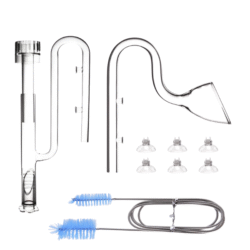
Best For: Small to mid-size tanks (Also excellent choice for low-profile, aesthetic flow control)
This beautiful borosilicate lily pipe set features both an outflow and a skimmer-style inflow that automatically adjusts to the water level. The integrated surface skimmer draws in the surface microlayer, while the outflow ensures clean, even circulation.
Because it’s made from clear glass and acrylic, it blends seamlessly into planted or aquascaped tanks.
Why It Works For Surface Film
- The integrated skimmer actively removes protein film
- Adjustable inflow lets you fine-tune how much surface water is drawn in
- Gentle, even surface ripple without harsh flow
Pros
- Clean, minimalist aesthetic ideal for aquascapes
- Auto-adjusts with water level
- High-quality glass construction
- Surface flow rate can be tuned by rotating the bottom plate
- Includes both inflow and outflow pieces
Cons
- Some users note bobbing or floating at the inflow
- Glass pieces require careful handling
- Tubing compatibility limited to 12–16 mm
2. AQUANEAT Aquarium Bio Sponge Filter Review
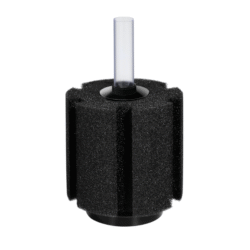
Best For: Mid-size tanks (40–60 gallons) and gentle flow setups
Sponge filters offer both mechanical and biological filtration while producing gentle vertical flow from rising bubbles. This model is large enough to service mid-size tanks but gentle enough for bettas, dwarf cichlids, fry, or shrimp.
While it won’t remove film on its own, the upward flow and increased oxygenation help prevent protein film from reforming.
Why It Works For Surface Film
- Rising bubbles promote surface agitation
- Added biofiltration stabilizes the tank, reducing DOC buildup
- Excellent for tanks needing low or moderate flow
Pros
- Provides both mechanical and biological filtration
- Safe for fry, shrimp, and small fish
- Easy to clean and maintain
- Affordable and long-lasting
Cons
- Takes up more tank space than other options
- Requires an external air pump (not included)
3. Uniclife Aquarium Air Pump Dual Outlet With Air Stones Review
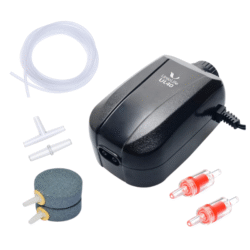
Best For: Large tanks or tanks needing extra oxygenation
This dual-outlet air pump delivers strong, adjustable airflow suitable for tanks up to 100 gallons. Paired with the included air stones, it provides consistent vertical circulation that breaks up surface film and boosts oxygen exchange.
It’s a solid all-purpose option whether you keep community fish, goldfish, or planted tanks.
Why It Works For Surface Film
- Dense, medium bubbles break the surface tension
- Strong aeration increases gas exchange
- Great supplement for tanks with low or inconsistent surface ripple
Pros
- Quiet for its size
- Adjustable airflow via rotary knob
- Suitable for a wide range of tank sizes
- Includes air stones, tubing, check valves, and connectors
- Excellent value for money
Cons
- Not a direct film removal tool — works by disturbance
Frequently Asked Questions
Surface film is extremely common in freshwater aquariums, especially in tanks with light surface movement or higher organic load. These questions cover the issues hobbyists search for most often and offer quick, accurate guidance based on how protein film behaves in real tanks.
Don’t see your question? Respond in the comments, and we’ll get back to you!
Why Does Surface Film Form Overnight?
Protein film forms quickly because dissolved organic compounds rise to the surface as they break down. Overnight, water movement slows and feeding residue settles, allowing a thin layer of organics to spread across the still water.
How Often Does Surface Film Come Back?
It depends on the type of film and your tank’s setup.
- Protein film can return daily in tanks with low surface movement, especially planted tanks.
- Biofilm can reappear during the first few weeks of cycling.
- Oil film will return immediately if the contamination source is still present.
Do Bettas Need A Clear Surface?
Yes. Bettas and other labyrinth fish breathe atmospheric air.
Thick surface film can make surface access harder, so long-term fixes like skimmers and surface agitation are especially important.
Can Surface Film Cause Low Oxygen?
Yes. Surface film can reduce gas exchange at the surface, which is where most oxygen enters the aquarium. Tanks with warm water, low flow, or higher stocking levels are most affected.
Do Air Stones Help?
Air stones indirectly help by improving overall circulation, but they do not directly break up surface films. Most of the bubbles rise vertically without disturbing the surface.
Surface agitation from filter output or a powerhead is more effective.
Is Surface Film Normal In New Tanks?
Yes. New tanks often develop protein film while bacterial colonies mature. As the tank stabilizes and surface flow is adjusted, the film usually becomes less frequent.
Want A Tank That Looks Perfect?
You’ve mastered how to remove and prevent surface films. Now let’s level-up your entire aquarium experience with focused growth and clarity.
- Explore the best plants for beginning aquarists: These plants don’t just look great — they help absorb excess nutrients, stabilize water chemistry, and reduce the conditions that cause surface film.
- Build a nearly maintenance-free ecosystem: Learn how to balance fish, plants, filtration, and circulation so your system keeps itself cleaner and clearer.
- Get your tank sparkling with minimal effort: These tactical hacks deliver visible clarity fast — a perfect companion to your new surface-film strategy.



Thank you! I just saw this film on my aquarium this morning (1 out of 5 so I guess not bad) and freaked! Now I know how to fix it. Thank you!
Hi Lorena,
Glad we could help. While that oily film may look disgusting, in most cases it’s an easy fix. I hope you were able to fix it!
Grabbed a skimmer. Works so good. Sucks all the oily mess from the surface without any effort from me. No more oil.
Hi Jessa,
Glad to hear that the surface skimmer is keeping your tank oil-free, there is no denying that they work well. I just don’t like that they add an extra piece of equipment to your tank. My preference is to try and figure out the cause of the oil slick first and using a skimmer as a last effort.
Hi, thanks so much for posting this. I have a brand new 5 gallon Fluval Spec with a male betta. I am fishin cycling, i had no other choice. And I am supplementing with Seachem Stability to jump start the nitrogen cycle. I have a pretty bad white/gray sludgy biofilm going on. Anytime I touch the water or my fish breaks the surface it breaks up in that section and particles sink to the bottom, some get sucked into the intake. Is this just normal? Part of a new aquarium? I’m not too worried about it….I’m expecting this to go away naturally. Is this nothing to worry about? thank you.
Hi Kodee,
If it’s thick and chunky, you can try scooping as much as you can out off the surface. A fine aquarium net, such as one used to scoop out baby brine fish, will work well. Once done, pointing your filter outlet at the surface should help break down the smaller parts.
If, after that, it goes away and doesn’t return then it’s all good. If the slimy surface comes back then you will need to investigate what is causing the problem. It could be your bottled bacteria, food, etc. Unfortunately, it can take a little trial and error to find the cause.
Kodee, which skimmer did you get? I tried one of the cheap ones. It did do its job, but really didn’t fit my tank very well, and was rather unsightly inside the tank.
Hi Phil,
While I plan to test these in the future, a member of my local fish club uses a Jardli glass skimmer, which is by far the best looking skimmer I have seen in that it blends into the background. His only complaint is that it’s difficult to clean – it doesn’t remain crystal clear. His solution was to then he take it apart and dunk it in his shrimp tank and they get rid of most of the gunk for him.
I initially looked at this page because I have two aquatic turtles that recently I’ve had to be relocated to a tank with less water and the film has started to appear where I never had a film in my larger tanks so I think it is the poop that’s giving it problems because I remove them for their feedings and right now I don’t have a pump that is able to reach the bottom of this very deep tank so the paper towels work once I’ll keep trying them again and again until they don’t work anymore.
Hi Hannah,
Being a fish guy myself, I don’t have any experience with turtle tanks. With that said, are you able to vary their diets?
I have had a painted turtle before me and my wife moved. We used a canister filter with pvc to extend down to the water the outlet at the top of the water and inlet side at the bottom. We would also do water changes every week and filter every two cleaning it out.
I have 4 Beta bowls above my kitchen sink so I’m guessing the oil is from cooking although I honestly don’t cook much that requires oil . I have been doing the paper towel suggestion and it works well in between water changes . There’s not much chance I’ll be moving them as they get the most attention while I’m at the sink . They each have their own personality and make doing dishes a pleasure. Thanks for your help
Hi Sheila,
It is always surprising just how little oil it takes to cause a slick on the surface of a tank. I am happy to hear you have found a solution.
What size tanks? Bettas need a 2.5 or larger with a heater and filter. Kitchens are usually not a great place for fish, or birds.
I noticed that my female bristle nose has white spots on her head and her tail looks all shredded. She sits on top of my power filter all day. Does not eat, but is impossible to catch. She has heaps of offspring in the tank. Today she was not seen. Could this cause an oil slick? I have so thick plants and my tank is very large. Not easy to find fish in here. My Discus seem fine.
Hi Hanna,
I don’t think that a pleco sitting on top of your power filter would cause an oil slick.
White spots usually represent “ick”. Shredded tail, she is probably being picked on and the stress has caused her to get sick. SHe needs treatment ASAP to avoid any further suffering.
We have a one gallon beta tank. We recently have oil on top and algae growing on items in the tank. We don’t allow extra food to stay in the tank, no kiddos hands in the tank or anything else. We also turn the light off from 8pm-8am. Do you have any other suggestions or treatments to stop this?
Hi Bea,
Your problem here is very likely . 1 gallon is too small for even a single betta (although big chain pet stores would have you think otherwise) Water quality issues quickly arise in tanks this small and generally need frequent water changes. Believe it or not, it’s more effort to keep a 1 gallon tank clean than a 2.5 or 5 gallon on account of how quickly the water quality diminishes.
If you don’t want to buy a larger tank, then you’ll have to squeeze a filter in and buy an aquarium test kit – this is the one I recommendm it will last you years, and allow you to quickly determine any issues as they arise. Next, ensure you have a filter, a small sponge filter attached to an airstone will do and make sure the current is low, betta don’t do well in strong currents.
I am working at cycling a 5 gal tank with a good hob filter a 1 young beta. using prime and bacteria supplement every day. I do a 50% water change 24 hrs after I dose with prime and bacteria. Always get a .5 ppm ammonia reading. Took a reading after the water change the amiona reading is always the same no matter what. When I had the little beta in a gal. Fish bowl I had to change the water every day and used prime and water was so toxic. Use r/o water checked it 0 amiona. I know it’s the dust particles when they it water turns to amiona. For every problem there is an answer. Thanks once again.
Hi Ruth,
If you are doing a fish-in cycle then ammonia is to be expected – that’s what cause the ammonia to appear. This ammonia is likely coming from your fish, food and other things in your tank. Once your tank is cycled this will no longer be there.
Drop a deuce, I love it! Thanks for another great article Ian. We have tons of bio film every week on our tanks and manually remove it a couple of times a week. We even posted a short YouTube video of us doing it. I actually considered writing an article on it, but you have it covered. We have considered surface skimmers and saw some really cool ones at Aqua Forest Aquarium made by ADA, but they were not cheap.
We feed our fish oily foods so that has to be the culprit.
Thanks again Ian, keep posting!
Hi Ben! Good to hear from you 🙂
I checked out your youtube video, it’s neat. I am happy to embed it in this article if you would like, it will help get your views up. No pressure if you don’t.
Oh, I find myself drooling over ADA products before their price tag snaps me back to reality. The aquatop skimmer is actually really good, it’s performance surprised me, it even outperformed the Eheim which is similarly designed but at a higher price point. As long as you replace the suction cups, those things suck. Well, actually, they don’t. That’s the problem. But that’s an easy fix, replacement suction cups are easy to come across.
Thanks for dropping in!
Hi Ian,
If you think the video would be beneficial for this article, go for it!
Already added. I gave your blog a shout-out too. Thanks Ben!
i just use a water bottle to remove it.
Hi Sue,
That can also work, although depending on the size of your tank, it may take multiple trips, especially if you don’t have a steady hand and scoop up too much water along with it. Sometimes the simplest solutions really are the best, right? Thanks for sharing.
I’m really grateful for the info you posted!! I’m doing a fish-in cycle with a new 10 gal for a beautiful HM King betta ( I realize that’s a “Petco” name).
I wasn’t too worried about the cycle because I used the TSS bacteria along with gravel & a filter from an established aquarium. However I was pretty freaked out when I noticed a huge oil slick today, until I came across your post. Paper towels worked wonders!
Thank you so much!
hi Cathy,
I’m glad I could help! It’s possible either the gravel or filter had trapped proteins and oils in them, it can happen depending on how well the other tank has been maintained. Wishing you all the best of luck with your cycling process!
Very helpful! I made a newbie mistake of placing my aquarium in the kitchen because of the natural light it gets. Now to find a new spot…
I have been getting oil slicks all summer and haven’t been able to figure out why. Frustrating!!! Reading your web site, it occurred to me that I was using fans a lot due to the summer heat. But why would that cause a problem? I have automatic areasol sprayers all over. Not close to tanks but the fans carry the air everywhere. Who knew? Thank you so much!
Hi Carene,
It doesn’t take much oil to cause an unsightly slick. If the problem goes away in the winter months, then I think you are on the money with the air circulation!
Very informative and entertaining article to read. The solutions in this publication helped me clear the film and keep it gone. Thank you!
So here we are 2024, and oil slicks daily! Very frustrating for sure. Not only oil slicks, but I am at cleaning the 3.5 tank ( 1 small female betta) weekly. Algae starts building…. Maybe I just suck at being a fish parent😞
Hi Rhonda. Don’t be too hard on yourself—maintaining an aquarium can be challenging, but you’re doing a great job seeking solutions! Oil slicks are often caused by excess organic materials such as food and natural oils from the fish itself. To manage this, consider feeding your betta slightly less, or ensure that the food is completely consumed within a few minutes. For the algae issue, reduce light exposure and make sure you don’t overfeed. A small tank filter designed for a 3.5-gallon tank might also assist in keeping the water cleaner and reducing both oil slicks and algae. Keep at it, and you’ll see improvements!