When you purchase through links on our site, we may earn a commission. Here’s how it works.
Fighting with a weak gravel vacuum that barely lifts waste or constantly floods your floor? After testing 40+ gravel vacuums on tanks from 2 to 200 gallons, these are the only models I’d use in my own fish room, sorted by tank size so you can pick the right one in under a minute.
You’ll also see when you can skip electric units, how often to vacuum, and the simple rules that keep ammonia and nitrate under control.
Table of Contents
| Best Overall | For Small Aquariums | For Large Aquariums | Budeget Pick | All-In-One Kit |
|---|---|---|---|---|
 |  |  |  |  |
| Python Pro-Clean | Lee’s Ultra GravelVac | Python Water Changer | Tetra | QZQ Aquraium Gravel Cleaner |
| View on Amazon | View on Amazon | View on Amazon | View on Amazon | View on Amazon |
| Read Review | Read Review | Read Review | Read Review | Read Review |
What Does a Gravel Vacuum Actually Do?
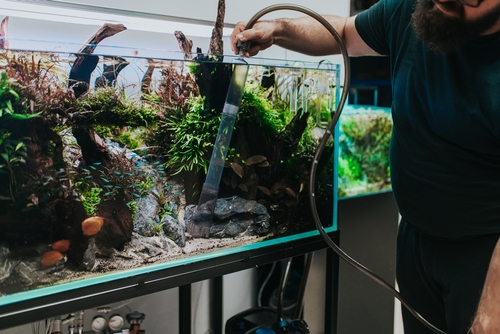
A gravel vacuum (also called an aquarium vacuum cleaner) is a rigid plastic tube attached to a flexible hose. You put the tube into the tank, start a siphon, and it does two jobs at once:
- Pulls dirty water out for water changes
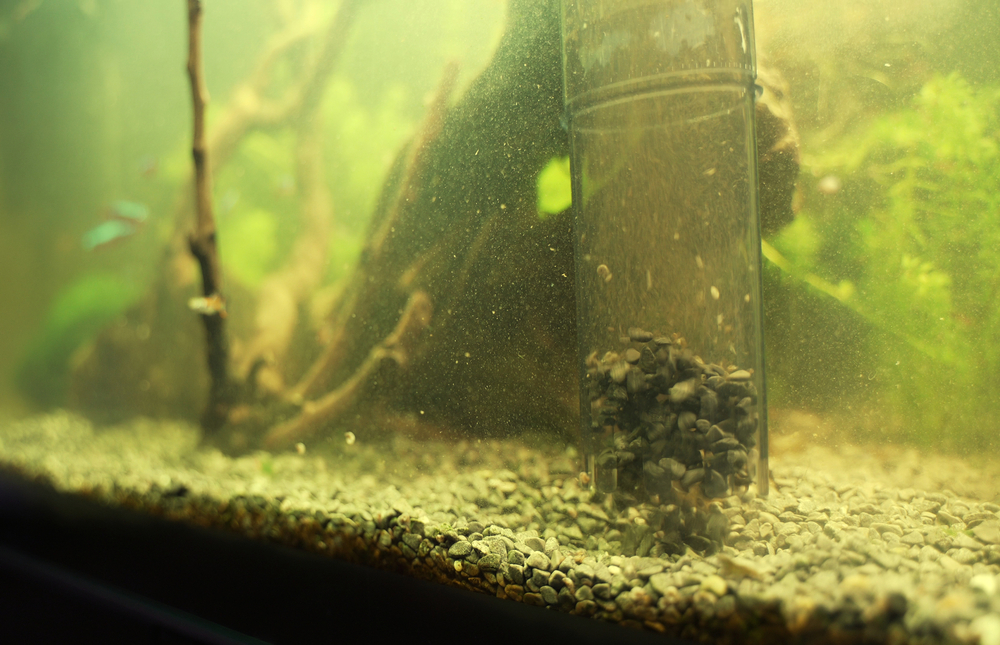
- Lifts waste out of the substrate, so it leaves the tank instead of rotting in the gravel
It looks simple, but in most aquariums, it becomes one of the most used tools in your fish room.
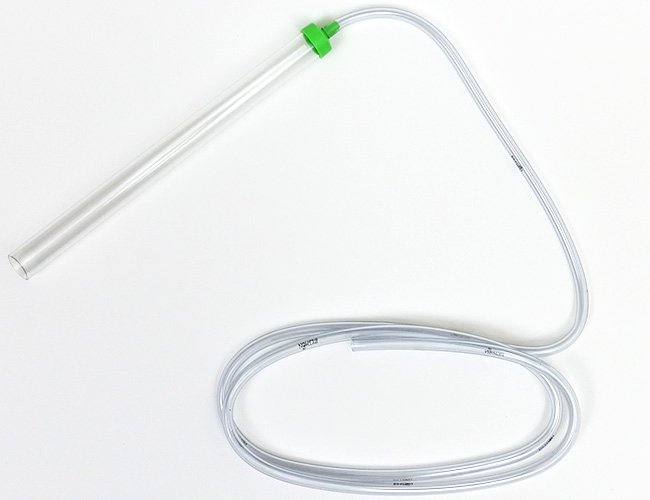
While it might look simple, a gravel vacuum is surprisingly handy.
With gravity’s help, a gravel vacuum will continuously drain water from your tank until you remove it from your aquarium.
How a Gravel Vacuum Works
A basic gravel vacuum is:
- A clear, rigid tube (usually around 2 in / 5 cm wide)
- Connected to a length of hose that drains into a bucket or sink
Once you start the siphon, gravity does the rest:
- Water flows up through the tube and down the hose
As long as the hose outlet is lower than the tank, water will keep moving. - You push the tube down into the substrate
Gravel and waste get pulled up into the tube. The gravel is heavy, so it falls back down, while lighter debris (fish poop, uneaten food, plant bits) gets sucked up and carried away. - You control the flow with the hose
Pinching or kinking the hose slows or stops the flow if it is pulling too hard or draining too fast. - You stop when you have removed enough water
Most people aim for roughly 25-30 percent of the tank volume per routine water change. When you are done, you simply lift the tube out of the tank to break the siphon.
So, a gravel vacuum is not just a fancy tube. It is a controlled way to physically remove solid waste while you are already doing a water change.
Gravel Vacuum vs Just Stirring the Substrate
You can stir the gravel with your hand or a stick, but it is almost always the worst option.
What happens when you just stir:
- All the trapped waste (poop, uneaten food, plant debris) gets kicked up into the water column.
- The tank turns cloudy, and most of that mess either settles back down or gets trapped in the filter, where it still breaks down and adds to your bioload.
- In extreme cases, suddenly releasing a lot of trapped waste can spike ammonia and nitrite, which is stressful or even dangerous for fish.
What happens when you use a gravel vacuum:
- You still disturb the waste, but the siphon immediately pulls it out of the tank and down the hose.
- You are not just moving gunk around; you are permanently removing it from the system.
- You get a cleaner substrate, more stable water parameters, and fewer surprise spikes.
That is why many consider a gravel vacuum essential, even on tanks without traditional gravel. It is the simplest, most reliable way to combine water changes with real waste removal in a single quick step.
However, if you have a larger tank, consider a good aquarium water changer instead. A water changer is essentially a giant gravel vacuum that connects to your faucet, eliminating the need to carry buckets of water back and forth through your home.
Why Do I Need a Gravel Vacuum If I Already Do Water Changes?
Water changes remove dirty water, but they do not pull out the solid waste trapped in your substrate. A gravel vacuum sucks out fish poop, uneaten food, and plant debris before it can rot. If you skip vacuuming, that gunk breaks down into ammonia, nitrite, and nitrate, which can stress and kill fish. Using a gravel vac with your regular water changes keeps the tank cleaner, clearer, and more stable.
How to Use a Gravel Vacuum (Video)
Not sure how to get started with your gravel vacuum? Whether it’s your first time or you just want a quick refresher, this video shows exactly how to use a siphon without making a mess or leaving water all over the floor.
Rule of thumb: For most tanks, aim to remove 25–30% of the water in 5–10 minutes with steady siphon flow. Slower than that and waste stays trapped; faster and you risk shocking fish with big water swings.
Siphon vs Electric: Which Type of Gravel Vacuum Is Best?
Both siphon and electric gravel vacuums remove waste from your substrate, but they excel at different tasks. For most aquariums, a simple siphon gravel vacuum is the main tool, and an electric unit is a nice extra for quick touch-ups.
Siphon Style Gravel Vacuums
A siphon gravel vacuum uses gravity to pull water and waste out of the tank and into a bucket or down a drain.
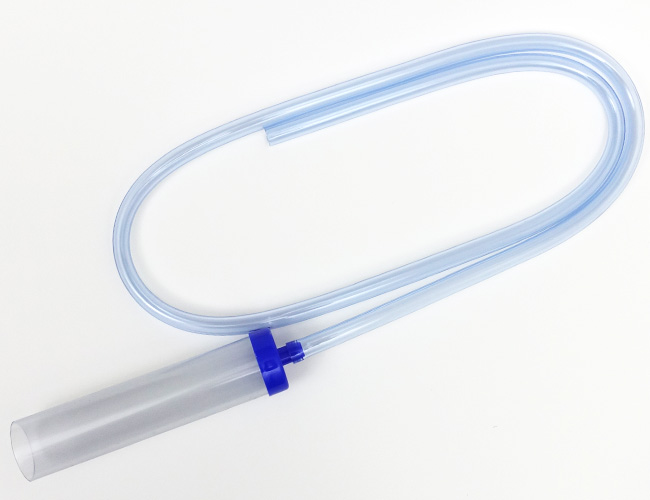
- Best for: Regular water changes and deep cleaning.
- Pros: No batteries, very few parts to break, strong and consistent flow, removes waste and water at the same time.
- Cons: You must carry buckets or use a water changer, and you need the hose outlet lower than the tank to keep the siphon running.
If you only buy one gravel vacuum for your tank, make it a siphon style.
Electric or Battery Gravel Vacuums
Electric and battery gravel vacuums use a small pump to pull water and waste into a filter compartment, then return the water to the tank.
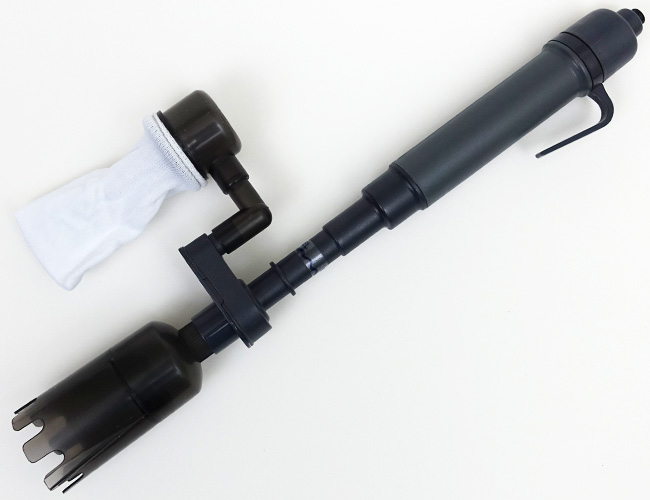
- Best for: Quick mid-week cleanups and light spot cleaning.
- Pros: You do not need to start a siphon or lower a hose into a bucket, and they can be handy for small messes.
- Cons: Weaker flow, more parts that can clog or fail, and they do not replace real water changes.
Think of electric gravel vacuums as a convenience tool. Use them to tidy up between water changes, but still rely on a siphon gravel vacuum or water changer for serious maintenance.
What Size Gravel Vacuum Do I Need for My Aquarium?
Size comes down to two things: how deep your tank is and how much gravel you need to clean. Deeper tanks need a longer tube so you do not dunk your whole arm, and larger tanks benefit from a wider opening to move more water.

Standard and Large Gravel Vacuums
- Opening: About 2 inches (5 cm)
- Tank size: 20 gallons and up
- Good for: Fast cleaning of big, open gravel areas
Small and Slim Gravel Vacuums
- Opening: About 1.5 inches (4 cm)
- Tank size: About 5 to 20 gallons
- Good for: Normal small community tanks with some plants and decor
Mini and Micro Gravel Vacuums
- Opening: About 1 inch (2.5 cm)
- Tank size: Up to 5 gallons, nano and shrimp tanks
- Good for: Precise cleaning around plants, rocks, and tight corners
Many aquarists use one standard vac for open areas and a mini vac for detail work, so cleaning stays fast but controlled.
How We Tested 40+ Gravel Vacuums
We rounded up more than 40 of the most common gravel vacuums, from basic store brands to Python-style systems, and tested them side by side. The goal was simple: find the models that are actually pleasant to use on real aquariums of different sizes, not just those that can start a siphon.
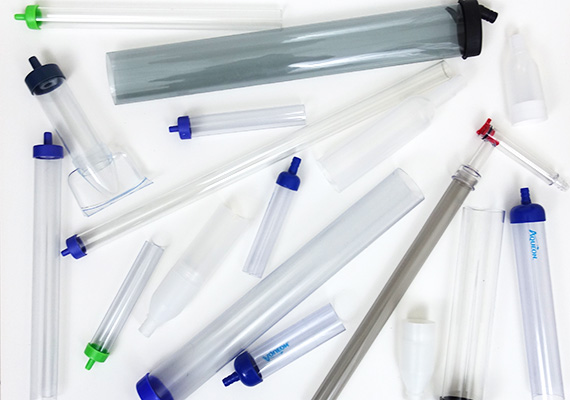
Tank Sizes and Setups Used
Each vacuum was tested on an appropriately sized tank so we could see where it really fit best:
- Small setups: 2-gallon bowl, 5-gallon, 10-gallon, and 20-gallon tanks
- Medium tank: my stocked 40-gallon display
- Large tanks: 60, 100, and 200-gallon tanks at my local fish store
Every tank had gravel, a heater, a filter outlet, and fake plants to mimic the obstacles in a normal aquarium. This showed us how each gravel vacuum handled real layouts, not just empty glass boxes.
Flow, Hose Quality, and Ease of Use Criteria
Almost every vacuum could siphon water. The real difference was in build quality and how easy they were to control.
- Flow and tube size: We looked at how quickly they moved water and how easy it was to clean gravel without draining the tank too fast.
- Hose flexibility: Softer hoses, like those on the Python Pro Clean, made it much easier to kink and unkink the line to control flow compared to stiffer hoses like the Aqueon Siphon Vacuum.
- Ease of use: How simple it was to start the siphon, move the tube around the decor, and reach the bottom without soaking your arm.
After dozens of hours and hundreds of water changes, a few clear winners stood out as the best-performing gravel vacuums for everyday use.
Best Gravel Vacuums for Your Tank
If you want a gravel vacuum that is going to easily and reliably clean and drain your tank for years to come, then read on to find the gravel vacuums that performed the best.
Full disclosure: Gravel vacuums are little more than a tube and a hose, a design repeated by every brand tested. Because of this, all gravel vacuums tested were able to both clean gravel and siphon water to some degree of effectiveness.
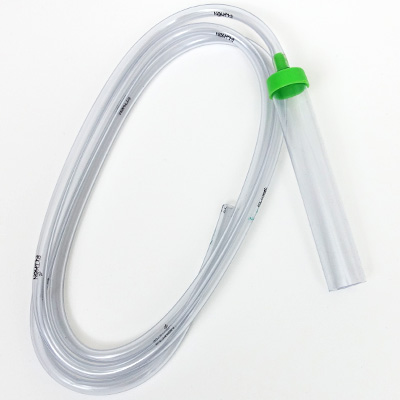
Best Overall: Python Pro-Clean Review
Python offers a wide range of exceptional water-changing products. Best of all, they are manufactured right here in the United States.
It was Python’s quality design that beat out the competition. The silicone hose easily flexed and returned to shape when squeezed, providing precise control over the flow of water being sucked out of the tank.
It has a narrow tube that fits nano tanks, a gentle flow, and a reliable siphon that makes small water changes easy. Meanwhile, the vacuum tubes were durable and made from a thicker plastic than any other brand of gravel vacuum.
- Best for: Most sized tanks (10 to 50+ gallons) when you want strong siphon flow and reliable hose control.
- Why it stands out: Flexible tubing, well‑built intake tube, strong flow control; performs like the “workhorse” vac in testing.
- Trade‑offs: Might feel oversized for super-small tanks (< 5 gallons) or super-shallow setups.
- Verdict: A safe default pick if you want one high‑quality vac that covers most use‑cases.
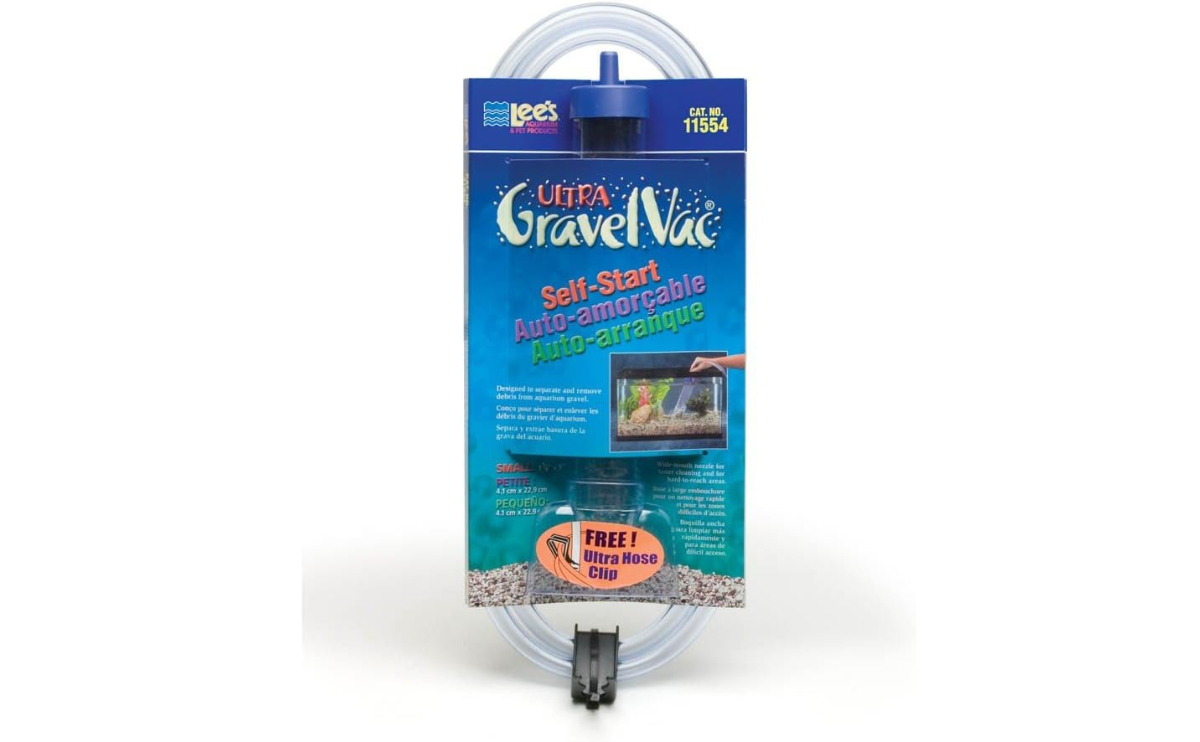
Best for Small Aquariums (10 to 20 gallons): Lee’s Ultra GravelVac Review
Good tube size for standard 10- to 20-gallon tanks, easy to start, and simple to control around decor.
Okay, so Lee’s Ultra Gravel Vac comes with a few extra bells and whistles.
First, it comes with an oval-shaped, wide-mouth attachment. This piece of plastic connects to the vacuum tube and provides about 20% more surface area. In truth, for this-sized tank, I didn’t find the attachment to be particularly helpful.
- Tube Length: 9 inches (23 cm)
- Opening 1: 5/8 inches (4 cm)
- Hose length: 6 feet (1.8 m)
And both the self-starter and the hose clip failed to impress.
If you strip these extras away, you are left with a perfectly sized gravel vacuum for small aquariums, one of the best on the market.
I am also happy to state that Lee also manufactures their gravel vacuums here in America.
Best for: Small to medium aquariums (10 to 20 gallons)
What stands out:
- Self-start siphon makes it easy to get going without extra tools.
- Wide-mouth nozzle improves coverage, making cleaning faster in tanks with plants or decorations
- Includes a hose clip to secure the drain line during water changes.
- Trade-offs: Slower for large tanks due to smaller diameter, may not reach the bottom in deeper tanks without an extension.
- Verdict: A reliable, user-friendly gravel vacuum for everyday use in most small to mid-sized tanks. Great balance of speed, control, and convenience.
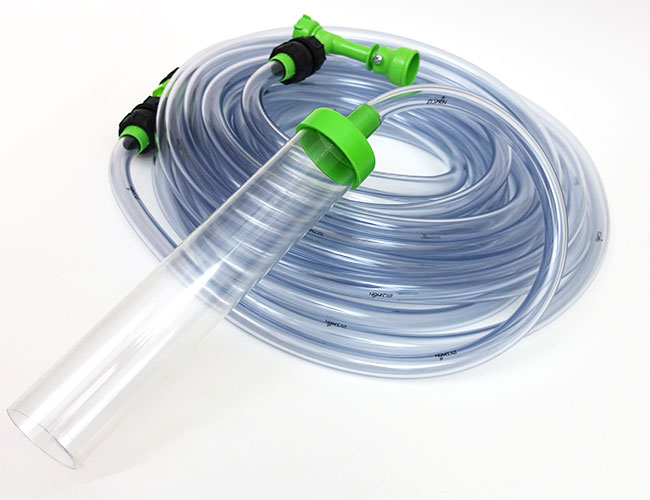
Best For Large Aquariums (50 Gallons+): Python Water Changer

The Python Water Changer is essentially a gravel vacuum that connects to your faucet with a long hose. With this handy device, you can clean your gravel while water is sucked out of your tank and emptied directly into your sink. Similarly, you can use the faucet to fill your aquarium with fresh water.
Yep, you will never have to carry a bucket of water through your house again!
Once you try out this water changer, gravel vacuums feel clumsy – there is no going back. Since switching over to a water changer, I have cut down my tank maintenance time by 20 minutes!
- Best for: Most sized tanks (10 to 50+ gallons) when you want strong siphon flow and reliable hose control.
- Why it stands out: Flexible tubing, well‑built intake tube, strong flow control; performs like the “workhorse” vac in testing.
- Trade‑offs: Might feel oversized for super small tanks (< 5 gallons) or super shallow setups.
- Verdict: A safe default pick if you want one high‑quality vac that covers most use‑cases.
Want more information? Read FishLab’s complete review of the Python Water Changer or check out our best water changer guide to see how it compares to the competition.
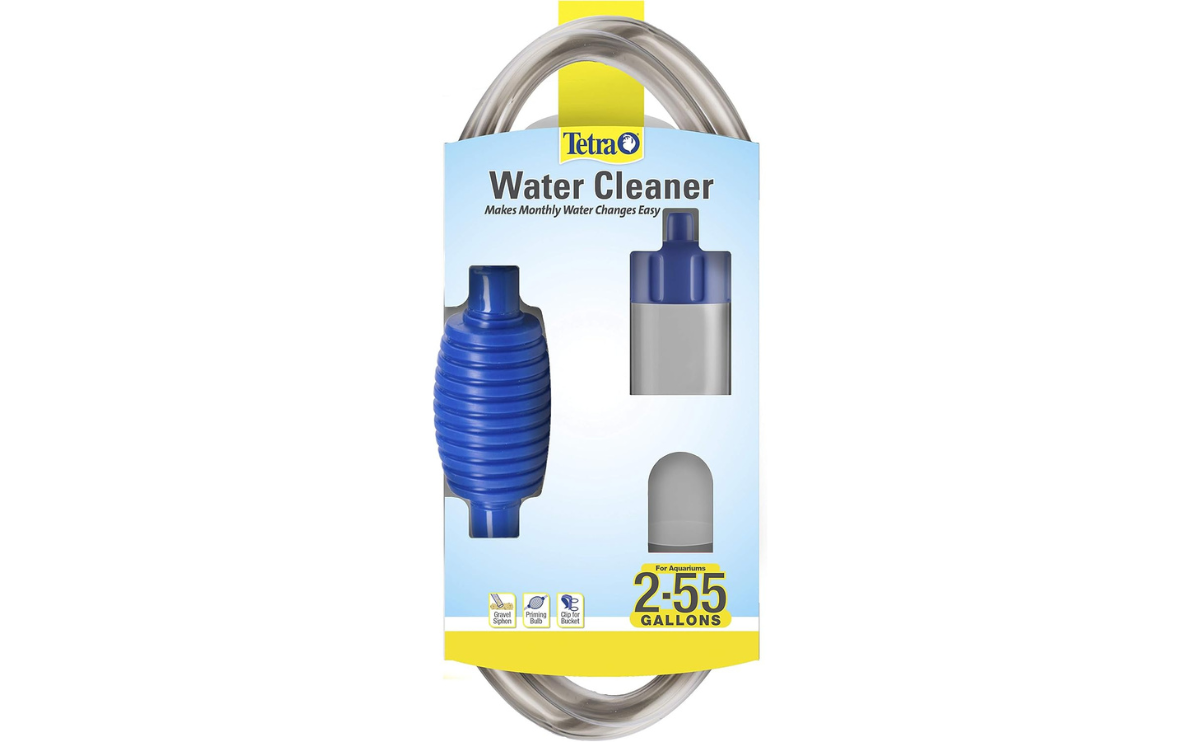
Budget Pick: Tetra Water Cleaner Gravel Siphon Review
If you just need a no-frills gravel vacuum to handle basic cleaning and water changes, the Tetra Water Cleaner is a solid entry-level option. It’s affordable, easy to use, and works well for smaller freshwater tanks where premium features aren’t a priority.
Best for: Budget-conscious aquarists with tanks up to 55 gallons
What stands out:
- Lightweight, easy-to-use siphon designed for basic gravel cleaning
- Budget-friendly option that works well for simple setups or as a backup vac
- Tetra claims it can help you replace 30% of your water in 30 minutes — ideal for monthly maintenance.
- Trade-offs: Hose is thinner and more prone to kinking compared to higher-end models
- No flow control or extra features like hose clips or wide-mouth tubes.
- Verdict: A basic gravel vac for basic jobs. It gets the job done if you are on a tight budget or just need a simple tool for routine cleanups, but not built for long-term heavy use or larger tanks.
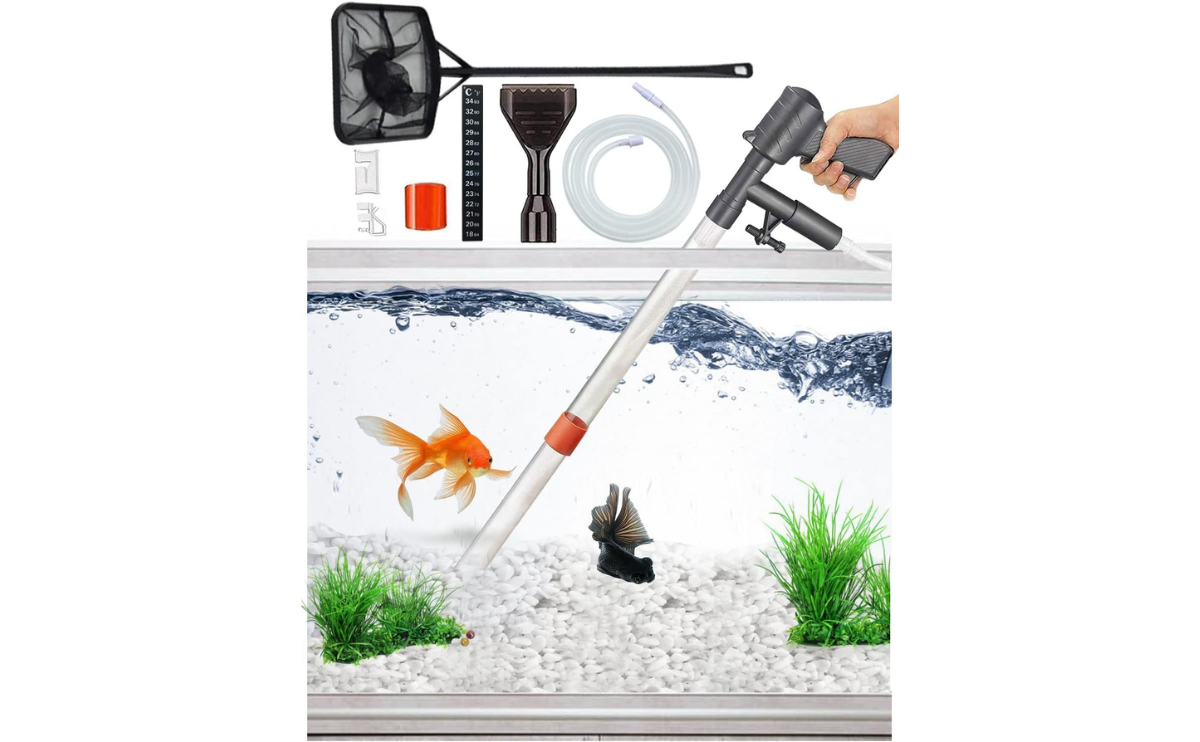
Best All-in-One Kit: QZQ Aquarium Gravel Cleaner Kit Review
New to aquarium maintenance and not sure what tools you need? The QZQ Gravel Cleaner Kit takes the guesswork out by bundling everything into one simple package.
It’s a great option for small to mid-sized tanks and ideal for first-time aquarists who want an easy setup without extra gear.
- Includes: Gravel vacuum, manual siphon pump, thermometer, fish net, cleaning brush, and hose clip
- Easy siphon start: Push-button pump gets the water flowing without sucking on the hose
- Fish-safe: Built-in filter basket prevents debris or small fish from being sucked into the tube
- Budget-friendly: You get multiple tools in one low-cost kit
Best Electric Gravel Vacuum: UPETTOOLS Electric Gravel Cleaner Review

If you’re tired of manual siphoning or dealing with buckets, the UPETTOOLS Electric Gravel Cleaner offers a serious upgrade. It combines a strong pump, multiple attachments, and adjustable suction to give you fast, hands-free cleaning, especially helpful for large tanks or regular deep maintenance.
- Fully motorized: Built-in 28W electric pump moves up to 1700 liters per hour, ideal for quick water changes.
- 6-in-1 tool: Vacuums gravel, removes debris, filters water, and more. It works in both freshwater and saltwater setups.
- Telescoping tube: Adjustable length fits most tank sizes without soaking your arm.
- Controlled suction: The flow valve lets you fine-tune pressure for different substrates or tank layouts.
How to Choose the Right Gravel Vacuum for Your Aquarium
The best gravel vacuum for your tank depends on three main factors: tank size, your maintenance routine, and whether you prefer manual or electric tools.
- Tank size:
- Under 10 gallons – Use a mini or slim vacuum for precision and gentle flow
- 10–30 gallons – Go with a standard siphon or gravel vac with flow control
- 30+ gallons – Choose a large siphon or motorized system to save time
- Manual vs electric:
- Manual siphons are best for water changes and deep cleaning
- Electric vacs are good for spot cleaning and convenience between water changes
- Substrate type:
- Gravel – Works with any vacuum
- Sand – Use a low-flow option or hover above the surface to avoid sucking up substrate
- Planted tanks – Choose a narrow nozzle or mini vac to avoid disturbing roots
Still not sure what to get? Start with a manual siphon matched to your tank size. Then, consider adding a motorized vac later if you want faster, low-effort cleanups between full water changes.
4 Maintenance Tips to Keep Your Gravel Vacuum Working Longer
A little upkeep goes a long way in keeping your gravel vacuum effective and easy to use.
- Rinse after every use: Flush the hose and nozzle with clean water to prevent buildup of gunk or algae.
- Hang hoses to dry: Avoid coiling tightly while wet — it prevents mold and reduces hose memory (curling).
- Check for cracks and splits: Inspect the tube and hose monthly, especially near connectors or pumps.
- Clean filter baskets (for electric models): Remove and rinse any internal screens or filter pads regularly.
Replace hoses or attachments when they stiffen, crack, or lose suction. Most parts are cheap and easy to swap out.
Can a Gravel Vacuum Replace Other Aquarium Cleaning Tools?
A gravel vacuum handles most substrate cleaning and water removal, but it doesn’t fully replace all other tools.
- Still use a sponge or scraper: For algae on glass and decor
- Still use a turkey baster or pipette: For spot-cleaning small nano tanks or tight corners
- Still use a filter brush: For cleaning tubing, intake pipes, and filters
Think of your gravel vacuum as the core tool for weekly maintenance. Add other tools as needed for detailed work.
FAQs: Common Gravel Vacuum Questions Answered
Still have questions about how gravel vacuums work or when to use them? Here are some quick answers to the most common things aquarists ask, whether you’re new to the hobby or just upgrading your setup. Drop your question in the comments if you don’t see it here.
How Often Should I Vacuum My Aquarium Gravel?
It depends on your tank’s bio-load and layout:
- Lightly stocked tanks: Every 2 to 4 weeks
- Community tanks: Every 1 to 2 weeks
- Heavily stocked tanks: Weekly
Use nitrate levels as a guide. If they regularly climb above 40 ppm between water changes, vacuum more often or more thoroughly.
Can I Use a Gravel Vacuum on Sand or Fine Substrates?
Yes. Just hold the vacuum slightly above the sand’s surface and hover rather than plunging in. This removes debris without pulling up the substrate. A flow control valve or fine-mesh guard can also help if your vacuum has one.
Will a Gravel Vacuum Remove Beneficial Bacteria?
No, most beneficial bacteria live in your filter media, not buried deep in the substrate. Normal vacuuming won’t harm your cycle. Just avoid vacuuming every inch of the substrate all at once in a newly cycled tank.
Is an Electric Gravel Vacuum Worth It?
Yes, if you want fast, convenient cleaning between water changes. Motorized vacs are great for touch-ups or hard-to-reach areas. That said, manual siphons are still better for full water changes and deep gravel cleaning.
What’s Your Gravel Vacuum Setup?
Tried one of these gravel vacuums? Found a clever cleaning hack that saves time or keeps your fish happier? We’d love to hear from you. Share your favorite tools, tips, or tank setups in the comments. Your experience could help another aquarist get it right the first time.
Whether you’re battling messy goldfish, fine sand, or a jungle of live plants, your story adds to the community. Let’s make fishkeeping easier (and cleaner) together.

Building a Cleaner, Healthier Tank
A gravel vacuum is one of the most valuable tools in your aquarium toolkit, but it’s only one piece of what makes a tank thrive. Clean gravel, stable water, and clear glass are signs of a balanced system, not just a recent cleaning. To get there, you need consistent habits, the right equipment, and a basic understanding of how your tank functions as a whole.
That starts with choosing the right substrate that works with your gravel vacuum and supports the fish and plants you keep. Feeding also plays a big role; uneaten flakes and pellets are the number one source of sludge buildup, so make sure you’re using high-quality fish food and feeding in small, measured amounts.
For even better water clarity, take a look at these 7 easy hacks for a crystal clear tank. They’ll help reduce maintenance time and improve your tank’s appearance without fancy equipment. And if you’re just starting out and still deciding whether fishkeeping is right for you, this article on reasons not to get a fish is a must-read. It’s better to know what you’re signing up for before diving in; your fish will thank you for it.



HI There
I use ” Pro Aquarium Gravel Cleaner Vacuum Pump” that is The Best electric gravel vacuum which you don’t have in your lists.
Hi Edo,
You are talking about a pump, which isn’t actually a gravel vacuum. For this review I only tested gravel vacuums, not pumps.
I really like your site – great for me who is a newbie. Unfortunately i live in the Netherlands and many of the products you are mentioning (recommending) are either unavailable or can only be purchased from far away meaning shipping costs are just adding too much to the price. Some examples, Crylon Fusion, Python waterchanger, GE silicone so living here, I have to find alternatives which is surprisingly hard.
Anyway I wanted to get a waterchanger and since the Python you recommended is nowhere to be found, i instead bought a JBL Aqua in out. Turns out its almost identical to the python.
Unfortunately i have forgotten what i learned in the physics classes in school so turned out to be a waste of money. Perhaps you should mention that these warerchangers most likely are OK for just draining your tank, but to use as a gravel cleaner you need a bit more power.
Here is my situation – i live in an apartment – the lowest positioned tap i have is just slightly higher than the tank itself. With water running at full speed, the suction i get is nowhere near enough to clean the gravel. Water pressure is normal (at least for my country) so nothing i can do about that. There are lots of posts about this for the Python as well (and of course its the law of physics at play, not the brand name).
Im now stuck with a long hose and some bits and pieces, costing a minor fortune and pretty much useless so here is what i ended up with (which works). I have a battery powered Fluval Pro Vac Plus (tried several others but they did not work well) and have now attached the hose i got to the JBL. Long enough to throw out on my terrasse. It can now be used to clean the gravel and drain water in one go, without the need for buckets. I have a second hose which attached to a tap is used to refill the tank. Not exactly what i wanted.
I wish I could find some info such as – what height difference (tap to tank) do you need to create a proper vacuum – are there any alternatives which comes with an electric pump instead of using water, are there any pumps available which can somehow be attached (and adjusted to get the right vacuum) and how about turning an airpump into a powerful enough waterpump. Finally it seems a big waste if you need the tap running, using hundreds of liters or gallons of water, just to remove water from your tank.
Any comments would be welcome but i guess for now im stuck with what i have.
Hi Tom,
Welcome to the hobby!
I honestly wish I could make product suggestions for international readers, but unfortunately, it would be almost impossible to accomplish this. I understand this does make things difficult, but from my research, fish keeping brands and products on the other side of the pond are vastly different to what we use here in America.
Does the Netherlands have a local fishkeeping community? When I first started out many many years ago, these were a huge help in getting me up to speed with learning the ins and outs of the hobby, including product recommendations. Although, back then, we didn’t have the internet. Still, people in your local community have probably faced similar problems to you and may still offer great advice, I’m sure some will live in apartments too and have already solved any issues you face.
I’m terribly sorry to hear about your water changing issues, this can be one of the more time consuming and difficult parts of the hobby – the layout of your home can impact it dramatically.
As for the water changer, is there a faucet outside the apartment your water changer could reach? I know some people throw their 50 ft tubing out a window of their 2 story house to a tap in their backyard, which solves the height problem. However, it may not be feasible for your apartment. You may even be able to get away with running the end of the water changer off your balcony and letting it free fall, using it as a more traditional siphon, avoiding the water waste from the faucet – I’m not sure what’s below your balcony, so this may or may not be an option. Both of these should produce adequate suction for gravel vacuuming with the water changer head.
The other route is a water pump as you suggested. For this you would probably be best speaking to a plumber to determine the size you need – I have little experience using a pump with a water changer.
Hello Ian,
Sorry for the silly question but, what kind of filter floss did you use with the Eheim device?
Thanks a lot!
Manel.
Hi Manel,
I don’t recall the brand, it was just some generic filter floss I bought off amazon. You know, the stuff that you pull apart or cut to suit your own filter?
Thanks so much for taking the time to review and comment on all these options. I have spent a ridiculous amount of time trying to figure out what option is appropriate for our 2.5 gallon betta tank. After a while on Amazon, all the options began to blur together and I wasn’t even sure which were credible reviews or authentic products. For something as simple a device as these are, it was ridiculously complicated to figure out what to purchase! Your reviews seem objective and are certainly thorough. I appreciate that! Thanks again.
Hi Lanefam,
I’ll agree with you here. When sourcing the products, I found buying gavel vacuums online is the worst. They all look the same in the pictures, the 40 inch tubes look identical to the 10 inch tubes. I do stress that all gravel vacuums I tested were capable of both draining and cleaning, so even if you choose another brand, it will work to some degree. The main difference is build quality and size and lengths of tubing, which make the whole experience more personalized for your tank. I’m glad I could help!
Hi there,
I’m based in the U.K. and find your site very helpful. I’m just wondering tho – above you don’t really talk about the type of substrate being cleaned which surely has a big impact on the cleaner used. I have a very sandy gravel. I bought a cleaner from a fish shop yesterday and the sand just flowed through the filter holes on the cleaner so I ended up cleaning it in a bucket and putting it back – not ideal. What would you recommend for fine gravel/sand? I know you are US based but I may find the brand here.
Thank you!
Hi Sam,
Glad I am helping those of you on the other side of the pond. You are correct, my review was tested using small to medium sized pebbles. Sand substrates are trickier to test as you don’t actually put the gravel vacuum tube on sand. For my last sand tank, I taped a chopstick to the end of the tube and used this to stir the sand while the siphon tube sucked off any floating debris that broke loose. How far the chopstick protrudes will take a little trial and error as there is some variation in suction depending on the gravel vacuum and tubing used. But you should be bale to eventually position it in a way that minimal to no sand is sucked up while anything resting on the surface is removed as the chopstick stirs through the sand.
Hi Bro,
Need your advise.
I having no gravel but with sand. The size of sand is size zero.
So when I suck the debris, it might suck the sands too.
Any equipment can solve my issue ?
Hi Ash,
I answer this just below, in my reply to Sam. Tape a chopstick or similar to the end of the tube.
I find the siphon cleaners work best with a hand pump to start the siphon off. Otherwise you risk sipping dirty tank water.
Hi Brian,
Everyone has a different approach, I never liked siphon bulbs as they are one more thing you need to clean and can get mold inside them.
These gravel pumps all literally suck! I need one bigger than 2″…does nobody make these anymore? It doesn’t matter how long it is, 2″ diameter works super crappy.
Hi Mike,
2 inches is basically the standard width of an opening – how large is your tank? 2 inches works just fine for most aquariums, unless you have a bare-bottom or undecorated tank, larger aquarium tubes get in the way of decorations and plants when cleaning. Why do you need one larger that 2 inches? I have not come across one in my time fish keeping.
If you need a “Bigger Tube” you could go online and research “3 inch Clear Poly Tubing” and buy it to length…. it’s on ebay…..
Hi JHC,
That’s actually an excellent tip! Thanks so much for sharing!
What about this one?
NICREW Power VAC Plus Automatic Gravel Cleaner, Electric Aquarium Cleaner with Sponge Filter, 3 in 1 Aquarium Vacuum Gravel Cleaner for Medium and Large Tanks
https://www.amazon.ca/NICREW-Automatic-Cleaner-Electric-Aquarium/dp/B07SH5LPMB/?tag=fishlabcsm-20
Hi Gary, I don’t test generic Chinese products. I used to, but they are over priced and often inferior quality, so now I don’t even waste my time with them.
The Nicrew one is just a rebranded generic gravel vac that can be found under a wide range of different names, like this one:
https://www.amazon.com/COODIA-Cleaner-Automatic-Aquarium-Extractor/dp/B07K7HGTSY?tag=fishlabcsm-20
Then how can your reviews be considered impartial.
You choose when to include or exclude at whim.
I would guess that some of the stuff you recommend is manufactured in china as well.
I have the full Python kit and although it is somewhat effective in cleaning gravel it creates such a mess in the process with pails of water it makes one want to give up
aquariums altogether.
I suspect that the reason our online Kijiji classified ads are overflowing with people
selling off all their setups at dollar store prices is due to what a pain in the aXX it is every 2 to 4 weeks.
I have this one on the way:
NICREW Power VAC Plus Automatic Gravel Cleaner, Electric Aquarium Cleaner with Sponge Filter, 3 in 1 Aquarium Vacuum Gravel Cleaner for Medium and Large Tanks
https://www.amazon.ca/NICREW-Automatic-Cleaner-Electric-Aquarium/dp/B07SH5LPMB/?tag=fishlabcsm-20
Then at least we will have some fair representation of all types.
PS:: There are 2 videos on Youtube on the unit.
The first is a how to assemble video.
and for a laugh
The second is where a Homer Simpson put the motor on backwards and can’t
figure out why it won’t work
Hi Gary,
I can locate more than 10 different brands of that same aquarium pump. I’m sure I could find more if I looked harder.
Nicrew like all these other brands, simply take a generic pump from China and whack their brand on it. They do not design it. They often do not even manufacture it. They simply place their logo on it (and in many cases don’t even bother to do that) – due to the nature of their business, their products tend to disappear, or they change design very quickly. That they already have a new gravel vacuum on the market follows this trend.
It’s not the fact that these companies manufacture in China. That I don’t care about. It’s the fact that there is no quality control, customer service….anything on their end. You are overpaying for a product that can be shipped direct from China for a few dollars, through alibaba.
I have reviewed plenty of Nicrew stuff in the past, including their last gravel vacuum, which wasn’t great. For instance, their automatic fish feeder is poor and their Preset aquarium heaters are downright dangerous. It has never compared to any brands that design their own product, so I don’t bother anymore with poorly made generic Chinese products – until feedback in the general aquarium community shifts, I will not be reviewing these generic products again.
With that said, I sincerely hope you like the product and that it meets your expectations.
NICREW Power VAC Plus Automatic Gravel Cleaner, Electric Aquarium Cleaner with Sponge Filter, 3 in 1 Aquarium Vacuum Gravel Cleaner for Medium and Large Tanks
https://www.amazon.ca/NICREW-Automatic-Cleaner-Electric-Aquarium/dp/B07SH5LPMB?tag=fishlabcsm-20
Here is a video review of the Coodia which is the American version:
https://www.amazon.ca/NICREW-Automatic-Cleaner-Electric-Aquarium/dp/B07SH5LPMB?tag=fishlabcsm-20
REVIEW:
https://www.youtube.com/watch?v=QN0AZUK8H0E&t=303s
Identical to the Canadian version
NICREW Power VAC Plus Automatic Gravel Cleaner, Electric Aquarium Cleaner with Sponge Filter, 3 in 1 Aquarium Vacuum Gravel Cleaner
Coodia and Nicrew are not the same brand. It would be like Nike and Adidas selling the same product.
NICREW is a trademark of SHENZHEN NICAI TECHNOLOGY CO.,LTD
COODIA is a trademark of ShenZhen JingShi Technology Co., Ltd
Going further, it’s identical to the SunSun one:
https://www.aliexpress.com/i/32967986750.html?spm=2114.12057483.0.0.4a873df4J8tR0h
Which is identical to this generic one:
https://www.aliexpress.com/i/33031483607.html?spm=2114.12057483.0.0.4a873df4cISEkJ
This one is a slightly modified version just to siphon water:
https://www.aliexapress.com/i/32952623939.html?spm=2114.12057483.0.0.465e32dbxx7rhx
Etc….
They are basically all the same pump. Generic Chinese reproductions.
This is why I don’t review them. I’m not sure why you are pushing so hard on this. It’s beginning to feel like you have an agenda. The fact is, there are better products on the market, I have listed the automatic gravel vac that I think is best above. This discussion isn’t going to change my mind on the bad reputation nicrew has made for itself.
My Agenda is this::
If you are going to do any kind of a comparison or review and you are claiming
to be impartial then why not have all the top players in the review?
ESPECIALLY when someone is asking you to give it a fair impartial test.
Instead you summarily dismiss it as being generic therefore you don’t
give it a fair evaluation.
This makes me question whether you have some sort of agenda and if your
reviews can even be trusted.
The degree of which you are so vehemently opposed to them is suspect to
your impartiality.
You are not gaining any reputation points yourself.
Hi Gary,
I’ve given my thoughts. I am unsure why you cannot accept this and insist on going around in circles.
All products reviewed on this site are paid for in full by me. This is my hobby and it doesn’t make enough money to cover costs. I have spent hundreds on nicrew products in the past, they have not once performed to the degree where I could recommend them. I am done giving them a second chance – as I showed you, it is a product sold under many names by different companies.
You asked for my opinion. I gave it. Don’t be mad if it doesn’t match your expectations.
I wish you the best of luck with your purchase. Feel free to let me know how it goes.
Hello from a UK user. The Python gravel vacuum fails badly and not at all as good as the reviewer claims. I’ll tell you why it fails badly. Holding the main plastic tube ready to vacuum and trying to siphon it won’t. The cause is the plastic tubing is too flexible and kinks over double just above the main wide plastic tube preventing the water siphoning. Unless you do a balancing act and hold the flexible tube. Poor design and not worth what I paid for. I luckily had some thicker stiffer wall tubing which didn’t kink over which made using alot easier. I notice the Aqueon vacuum that is alot cheaper has a coil built in which stops this very kinking problem. So I wish I bought the Aqueon which is 2/3 cheaper.
I suspect the too flexible Python tubing is the same on all models including the Python water changer dare I say.
Hi Mark,
Thanks for weighing in. Are you sure you don’t have a counterfeit? When I had everyone at my local fish club weigh in, the results feedback was unanimous – the python gravel vacuums far outperformed the Aqueon, which actually has the exact problems you list (among many others.) I can only comment on the USA models, as that is all that is readily available for me to test.
Hi Ian. I’m getting ready to set up my 55G and was hoping there’s a vacuum with a hose long enough to empty directly to the outside. The tank will be about 3 ft from the front door and the farthest end of the tank is another 4 ft, so I need something with a total length of approximately 8 ft so I can run it directly from the tank out the door and immediately off the deck to the ground. I don’t know if a water changer would work for me because my kitchen sink is not even close to the tank. I am open to suggestions. Just how long are the hoses on water change systems? Thank you.
Hi Deborah,
The shortest Python is 25 foot. However, you could buy their Gravel Tube with Tail Connector (2.5 ft) + the Gravel Cleaner Extension (10ft) for a total of 12.5 ft. The hose on the ordinary python siphons is about 6 ft, just too short…
Otherwise the basic python water change system comes in 25 ft, 50 ft, 75 ft, or 100 ft with the ability to extend either in either 10 or 20 ft increments.
Thanks Ian. I looked on Amazon and of course it’s there! Just what I need. I’ll still have to use buckets to replace water because I’m afraid to use my tap water. I have well water and there’s a salt residue in the tap water around the sink or if I air dry my dishes, from the well water filtering system. It tastes terrible. Water is Hard as a rock. I rent so I have no control over the filter system. I have RO water at the kitchen sink for drinking and cooking, but it only makes about 2 gallons at a time, so I’m always filling gallon jugs daily for the tanks. I’ll need three 5G buckets filled for the 55G, but at least I won’t have to empty 3 buckets of water! Thanks for your help once again.
Always glad to help 🙂
That sounds like a tricky situation with your water source. Have you looked into hard water loving fish? It might make your maintenance routine easier? Otherwise it sounds like you have your process all sorted, despite the extra effort needed.