The Ultimate Guide To Algae Control: Why Algae Keeps Coming Back (And How To Actually Stop It)

When you purchase through links on our site, we may earn a commission. Here’s how it works.
A clean aquarium is part science, part art. When algae creeps across the glass or coats your hardscape, it doesn’t just affect water quality; it breaks the visual balance you worked so hard to create.
Most algae outbreaks aren’t caused by neglect, but by slight imbalances that compound over time. By identifying the type you’re seeing and understanding what triggered it, you can correct the problem without overcorrecting or putting your fish at risk.
Table of Contents
This guide walks through algae identification, proven fixes, and expert-level prevention strategies used by long-time hobbyists to keep tanks clear, stable, and visually striking.
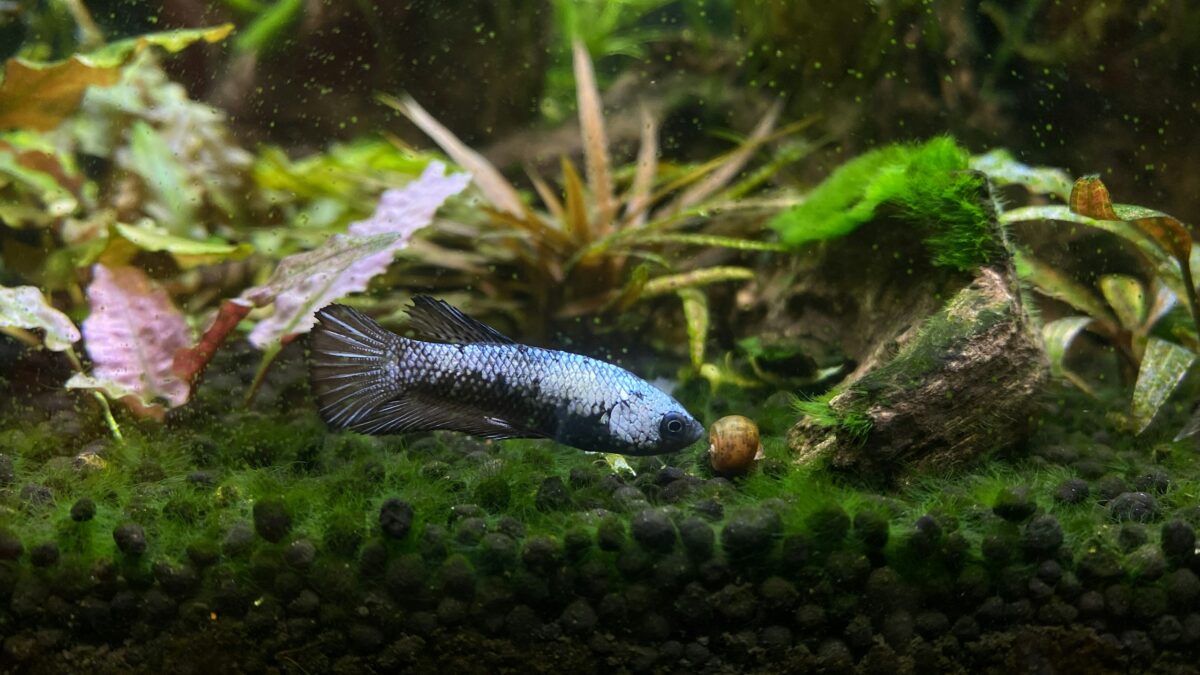
Start Here: Identify The Algae In Your Tank (Before You Treat Anything)
Before adjusting lights, scrubbing glass, or adding treatments, you need to know precisely what you’re up against. Different algae respond to very different solutions, and misidentification is the fastest way to waste time or stress fish.
Many algae types look similar at first glance, but behave very differently. Correct identification lets you choose targeted fixes instead of trial-and-error treatments that often make the problem worse.
Quick Algae ID Guide (Use This First)
Use the chart below as your first diagnostic tool. Once you’ve matched what you’re seeing to a likely algae type, you’ll have a clear roadmap for the corrective steps that follow below.
| What You’re Seeing | Likely Algae Type | Common Location | First Clue |
|---|---|---|---|
| Green, cloudy, or glowing water with reduced visibility | Green water algae (free-floating algae bloom) | Water column (water itself) | Wiping the glass doesn’t clear the green |
| Fine green powder or haze on glass | Green dust algae | Glass, hard surfaces | Wipes off easily but returns quickly |
| Hard, dark green dots or spots | Green spot algae | Glass, plant leaves | Scraping is required to remove it |
| Soft green strands or fuzzy mats | Green hair algae (filamentous algae) | Plants, substrate, decor | Strands sway or move in the current |
| Dark black or deep green tufts | Black beard algae (BBA) | Hardscape, leaf edges, filter outflow | Clings tightly and won’t wipe off |
| Gray or bluish branching growth | Staghorn algae | Plant edges, equipment, hardscape | Stiff, antler-like branches |
| Brown dusty or velvety coating | Brown algae (diatoms) | Glass, substrate, decorations | Very common in new tanks |
| Dark green, blue-green, or black slimy sheets | Cyanobacteria (blue-green algae) | Substrate, low-flow areas | Peels up in sheets and traps bubbles |
The 8 Most Common Aquarium Algae (And Exactly What Each One Needs)
Most algae problems fall into a small number of recognizable patterns. While they can look alarming at first, each type tends to show up for specific reasons and responds best to targeted adjustments rather than aggressive, one-size-fits-all fixes.
Below, you’ll find the most common aquarium algae types, how to recognize them, why they appear, and the safest ways to bring them back under control without destabilizing your tank.
1. Brown Diatoms
Brown diatoms are often the first algae type hobbyists encounter, especially in new or recently adjusted tanks. While they can make a tank look dusty or neglected, they’re usually a temporary phase rather than a sign of a serious underlying problem.

What It Looks Like
A light brown, tan, or rust-colored film that coats the glass, substrate, decor, and plant leaves. It wipes away easily with a sponge or scraper but often returns quickly.
Watch: Brown diatoms — also called brown hair algae — often appear as a dusty or fuzzy coating on surfaces, especially in newer or recently adjusted tanks.
Why It Shows Up
Brown diatoms commonly appear in new tanks, during tank upgrades, or after major changes such as new substrate, filtration, or lighting. They thrive when silicates are present and when the biological system is still stabilizing.
At a deeper level, diatoms take advantage of excess nutrients that plants and beneficial bacteria are not yet fully using. Their presence usually indicates a tank that is still maturing rather than one that is long-term out of balance.
What Works Best
- Allowing the tank to mature naturally
- Keeping lighting consistent rather than increasing intensity
- Performing regular, moderate water changes
- Improving mechanical filtration to remove suspended particles
What Makes It Worse
- Over-cleaning the tank in an attempt to “reset” it
- Large, frequent water changes that slow biological stability
- Treating diatoms with chemical algae removers in young tanks
Beginner-Safe Fix
Wipe affected surfaces during routine maintenance and focus on consistency rather than correction. Maintain a stable light schedule, perform regular water changes, and avoid aggressive cleaning.
In most tanks, brown diatoms resolve on their own as the system matures and biological competition increases. This is one of the few algae types where doing less often works better.
Advanced Hobbyist Notes
Persistent brown diatoms in established tanks often point to silicates, either in source water or released from new substrates and decor. If diatoms continue beyond the normal break-in period, testing source water and reviewing mechanical filtration efficiency can be helpful.
In planted tanks, ongoing diatoms may also indicate a mismatch between plant demand and available light or nutrients. Improving plant mass and fine-tuning light intensity often prevents recurrence once the initial bloom fades.
2. Green Dust Algae
Green dust algae often appears in tanks that otherwise appear healthy, which is why it can be especially frustrating. It’s common in newer setups or during periods of instability, and while it looks dramatic on the glass, it’s usually one of the least harmful types of algae.
What It Looks Like
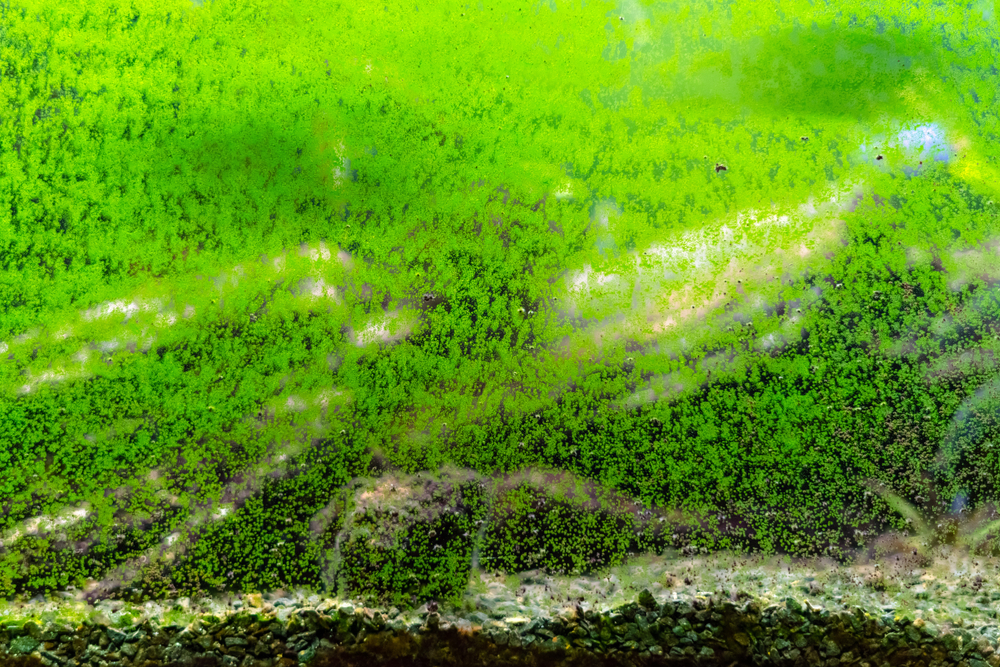
A fine green haze or film that coats the aquarium glass. It wipes away easily during cleaning but tends to return within days, sometimes even overnight.
Watch: In this video, a magnet cleaner is used to remove green dust algae in just a few swipes. Notice how easily it wipes off the glass — a key identification clue.
Why It Shows Up
Green dust algae is most often linked to unstable lighting cycles or a tank that is still finding equilibrium. It commonly appears in newer aquariums, after lighting changes, or when plants have not yet established strong nutrient uptake.
What Works Best
- Maintaining a consistent lighting schedule day to day
- Avoiding frequent adjustments to light intensity or duration
- Allowing plants time to establish and compete for nutrients
- Gentle manual removal during routine maintenance
What Makes It Worse
- Scrubbing the glass immediately every time algae appears
- Frequently changing lighting settings in response to algae
- Using chemical treatments for a largely cosmetic issue
Beginner-Safe Fix
Set a consistent light schedule and resist the urge to clean the glass daily. In many tanks, green dust algae resolves on its own once the system stabilizes and plant growth improves.
Light wiping during routine maintenance is fine, but aggressive or frequent cleaning often delays resolution.
Advanced Hobbyist Notes
Green dust algae thrives on instability. Scrubbing the glass and cleaning the tank every time it appears resets its growth cycle and encourages rapid regrowth.
The remedy? Controlled neglect. Allowing the algae to run its course and stabilizing light and nutrients is more effective than constant removal.
In planted tanks, refining nutrient balance and plant mass can accelerate long-term resolution without introducing stress to the system.
3. Green Water Algae
Green water algae is one of the most dramatic algae problems hobbyists encounter, often appearing almost overnight. While it can make a tank look completely opaque, it’s usually a sign of imbalance rather than a dangerous condition for fish.
What It Looks Like
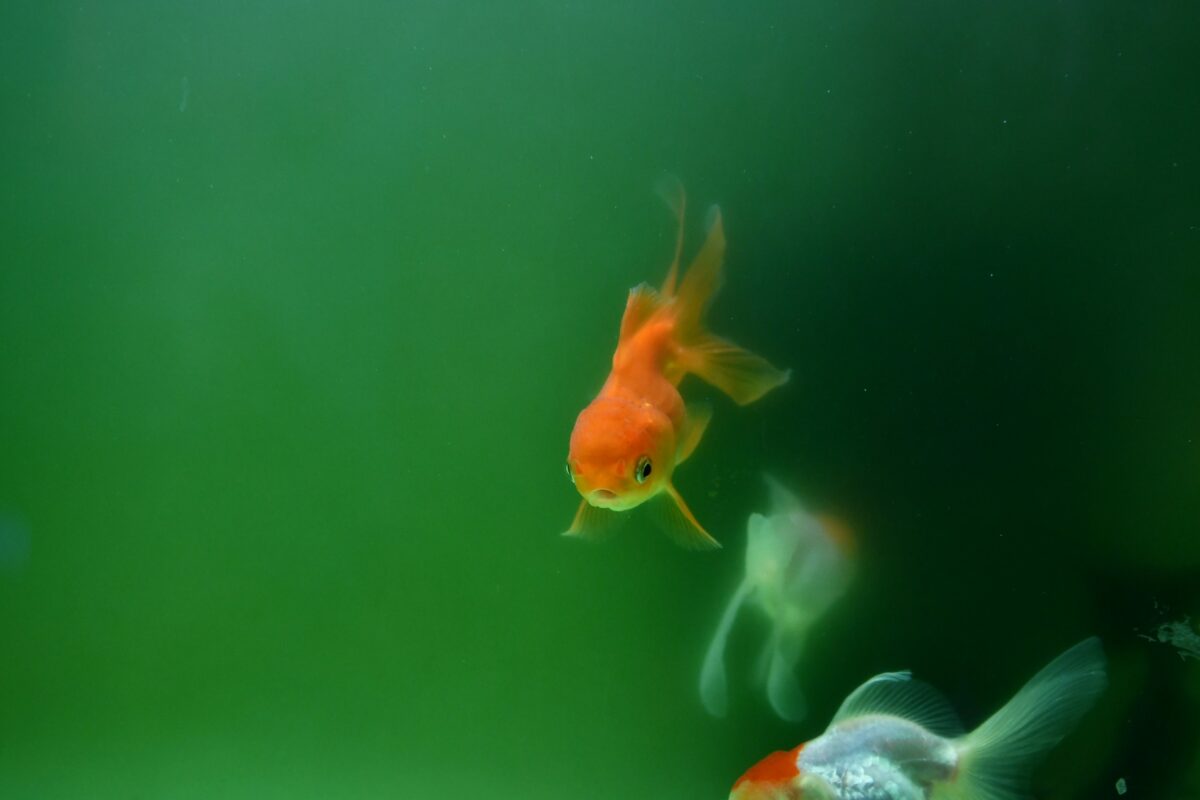
The water turns green, cloudy, or pea-soup opaque, reducing visibility throughout the tank. Unlike surface algae, the growth is suspended in the water column rather than attached to glass or decor.
Watch: This walkthrough demonstrates a beginner-safe approach to green water algae using partial water changes and temporary light reduction.
Why It Shows Up
Green water algae thrives when light and nutrients are both abundant, especially in tanks with intense or extended lighting. It commonly appears in newly set up tanks, after significant changes, or when nutrient levels rise faster than plants or filtration can keep up.
This algae is made up of free-floating microscopic organisms that reproduce rapidly under consistent light. Because it doesn’t rely on surfaces, water clarity can decline quickly once conditions favor growth.
What Works Best
- Temporarily reducing light intensity or duration
- Performing partial water changes to dilute excess nutrients
- Using a UV sterilizer to target free-floating algae
- Improving mechanical and biological filtration
What Makes It Worse
- Repeated large water changes without addressing lighting
- Leaving lights on for extended periods “to help plants recover”
- Treating symptoms without stabilizing the system
Beginner-Safe Fix
Shorten the light cycle and focus on consistency. Many cases of green water resolve once excess light and nutrients are reduced and the tank stabilizes, even without aggressive intervention.
Advanced Hobbyist Notes
Green water responds exceptionally well to UV sterilization. Because the algae is free-floating, an appropriately sized UV sterilizer can restore water clarity within days.
For long-term prevention, experienced hobbyists pair UV use with controlled lighting, stable nutrient input, and strong biological filtration to prevent recurrence rather than relying on UV as a permanent crutch.
4. Green Spot Algae
Green spot algae is one of the most persistent algae types hobbyists deal with, mainly because it doesn’t respond to quick fixes. Unlike earlier algae, this one tends to settle in and stay until the underlying imbalance is addressed.
What It Looks Like
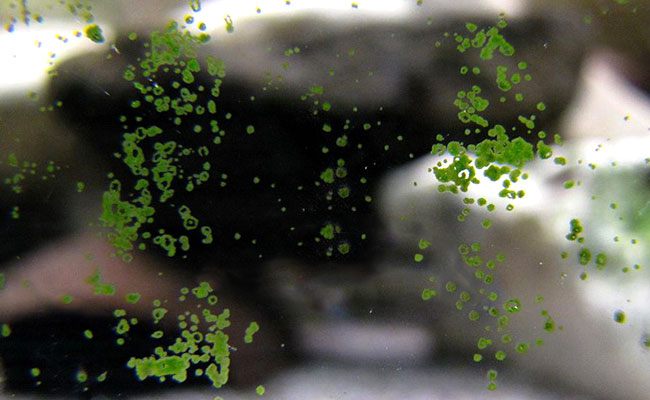
Small, hard green dots that cling tightly to aquarium glass, rocks, and slow-growing plant leaves. The spots are difficult to scrape off and often require a razor or firm scraper to remove.
Watch: Green spot algae forms hard, stubborn dots on glass and decor. This video shows what it looks like, how it’s removed mechanically, and why lighting and phosphate imbalance often play a role.
Why It Shows Up
Green spot algae is most often associated with high light paired with low available phosphate. It commonly appears in well-lit tanks where plants are growing slowly or struggling to keep up with light intensity.
What Works Best
- Manual removal during routine maintenance
- Slightly reducing light intensity or photoperiod
- Ensuring adequate phosphate availability for plants
- Encouraging healthy plant growth to outcompete algae
What Makes It Worse
- Increasing light to “push” plant growth
- Ignoring nutrient balance while focusing only on cleaning
- Repeated scraping without addressing the cause
Beginner-Safe Fix
Do not increase lighting further. Instead, maintain a reasonable light schedule and focus on balanced fertilization.
As plant growth improves and nutrient balance stabilizes, green spot algae typically becomes easier to control with routine maintenance alone.
Advanced Hobbyist Notes
Green spot algae is a reliable indicator of light-to-nutrient imbalance. In planted tanks, slightly reducing light while correcting phosphate levels is often more effective than aggressive cleaning.
Experienced aquarists may fine-tune light intensity rather than duration, lowering algae pressure without compromising plant health or growth patterns.
5. Hair Algae
Hair algae is one of the most visually obvious algae problems and is often the point at which hobbyists feel they’re “losing control” of the tank. While it looks aggressive, it usually develops gradually and responds well to targeted system adjustments rather than drastic measures.
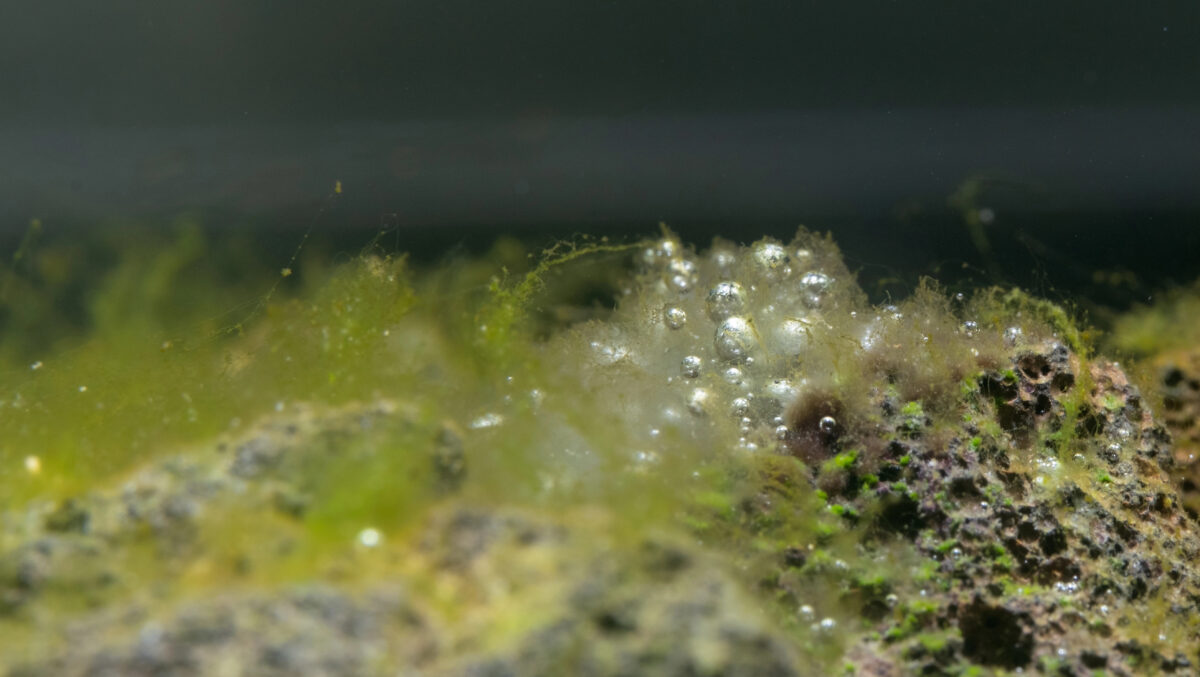
What It Looks Like
Long, soft green strands that grow from plant leaves, decor, hardscape, and equipment. The strands may wave in the current and can range from a light green fuzz to thicker, tangled growth.
Watch: Notice how this bright green algae moves freely in the water rather than holding a stiff shape. That flexibility is a key trait that helps distinguish hair algae from similar-looking varieties.
Why It Shows Up
Hair algae typically appears when excess nutrients and light are both available, especially nitrate and phosphate. It’s common in tanks with inconsistent maintenance, heavy feeding, or lighting that exceeds what plants can effectively use.
What Works Best
- Reducing excess nutrients through controlled feeding
- Maintaining consistent water change schedules
- Adjusting lighting intensity or duration
- Manually removing algae to reduce biomass
- Encouraging healthy, competitive plant growth
What Makes It Worse
- Leaving visible algae in place to “see what happens”
- Increasing light to stimulate plant recovery
- Ignoring feeding and stocking levels
- Relying on algae eaters alone to solve the issue
Beginner-Safe Fix
Start with manual removal and consistency. Remove visible strands during routine maintenance, reduce feeding slightly, and maintain regular water changes. Avoid increasing light intensity or duration in response to algae growth.
As nutrient input stabilizes and overall maintenance becomes consistent, hair algae growth often slows and becomes easier to manage.
Advanced Hobbyist Notes
Hair algae thrives on excess availability, not simply excess nutrients. Experienced aquarists focus on improving nutrient uptake rather than aggressively reducing nutrients.
Increasing healthy plant mass, optimizing flow to prevent stagnant zones, and refining fertilization schedules help shift nutrients toward plants instead of algae. Addressing this imbalance shortens recovery time and reduces the likelihood of repeat outbreaks.
6. Staghorn Algae
Staghorn algae tends to appear when a tank is under stress rather than simply overfed or overlit. It’s less common than hair algae, but when it shows up, it usually points to instability in flow, carbon availability, or overall system balance.

What It Looks Like
Thin, branching strands that resemble antlers or forked twigs. The color can range from gray-green to reddish or purplish, and it often grows along plant edges, decor, or equipment exposed to water movement.
Watch: This tank developed staghorn algae after heavy fertilization, a real-world example of how nutrient imbalance can trigger growth.
Why It Shows Up
Staghorn algae is commonly associated with system instability, particularly changes in flow, fertilization, or lighting. It often appears after disruptions such as filter maintenance, dosing swings, or sudden environmental changes.
Rather than responding to excess nutrients alone, staghorn algae takes advantage of stressed plants. When plants struggle to photosynthesize efficiently due to instability, staghorn algae fills the gap, especially in high-flow areas where nutrients concentrate.
What Works Best
- Reducing excessive or uneven light exposure
- Supporting plant health through consistent care
- Manual removal where growth is accessible
- Targeted spot treatment to weaken localized growth
What Makes It Worse
- Making frequent, reactive adjustments to multiple variables at once
- Ignoring flow dead zones or uneven circulation
- Attempting blanket treatments without addressing plant stress
Beginner-Safe Fix
Focus on restoring consistency. Avoid changing lighting, dosing, or maintenance routines too quickly, and ensure water movement is evenly distributed throughout the tank.
As plant health improves and conditions stabilize, staghorn algae often weaken and recede.
Advanced Hobbyist Notes
Staghorn algae is primarily a stress indicator, not a simple nutrient issue. Experienced aquarists examine recent changes to lighting, fertilization, and flow, then reduce excess light exposure while correcting circulation and plant stress.
Spot treatments can help break down visible growth, but long-term resolution depends on removing the instability that allowed staghorn algae to establish in the first place.
7. Black Beard Algae
Black beard algae is one of the most stubborn algae types hobbyists encounter, largely because it anchors itself tightly and resists casual removal. When it appears, it usually signals a chronic imbalance rather than a short-term fluctuation.
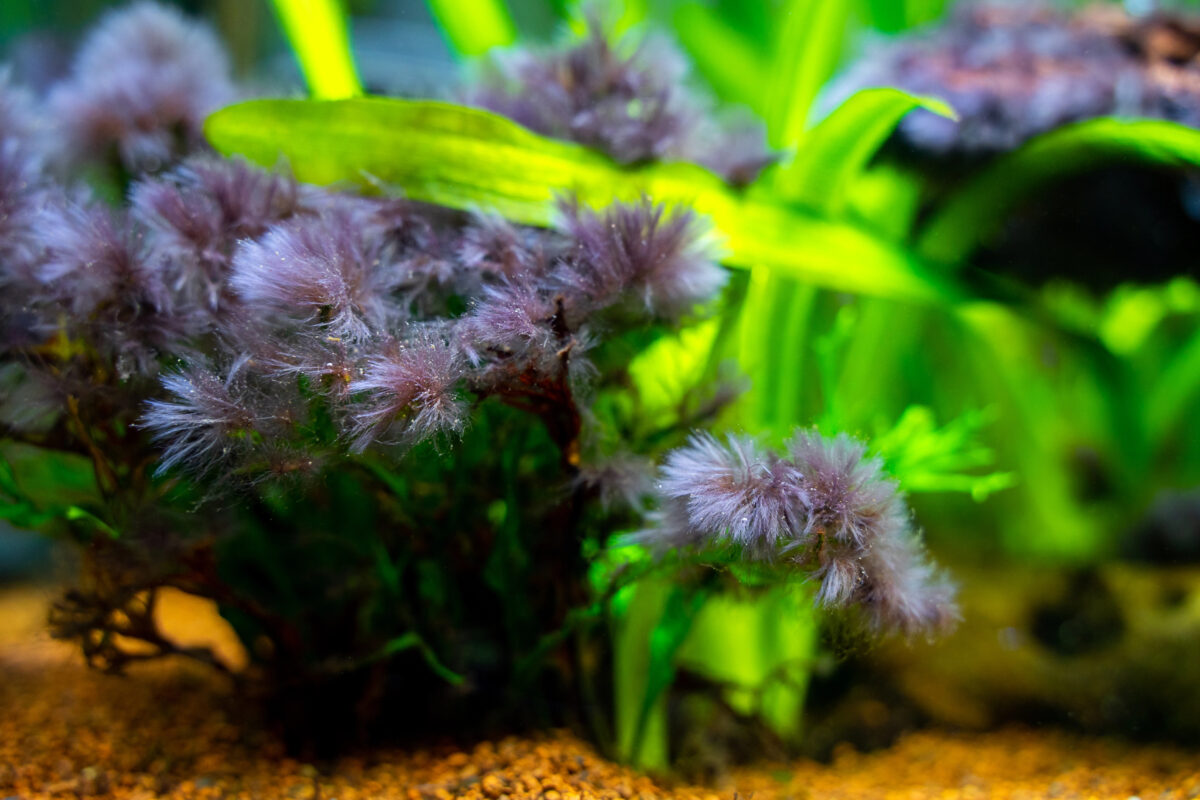
What It Looks Like
Dense, dark tufts that range from deep green to black, often forming along hardscape, plant edges, filter outlets, and other high-flow areas.
The growth feels coarse and clings tightly to surfaces.
Watch: This clip shows what black beard algae looks like on various aquarium hardscapes. BBA responds best to precision and stability rather than whole-tank chemical dosing.
Why It Shows Up
Black beard algae is strongly associated with inconsistent carbon availability, organic buildup, and uneven flow. It often appears in tanks with fluctuating maintenance routines or areas where debris accumulates despite overall cleanliness.
This algae exploits inefficiencies in circulation and plant metabolism. When plants are stressed or carbon availability is unstable, black beard algae can establish itself in zones where nutrients and flow concentrate.
What Works Best
- Improving circulation and eliminating flow dead spots
- Maintaining consistent maintenance and dosing routines
- Targeted spot treatment to weaken localized growth
- Manually removing affected leaves or decor when possible
- Supporting strong, healthy plant growth
What Makes It Worse
- Ignoring localized problem areas
- Making aggressive changes without addressing flow
- Relying solely on algae eaters to control established growth
- Letting organic debris accumulate in high-flow zones
Beginner-Safe Fix
Focus on restoring overall consistency. Gently clean affected areas during routine maintenance and remove heavily infested leaves if necessary. Make sure water movement is evenly distributed throughout the tank.
Avoid sudden, system-wide changes while plants recover. Stability alone often slows black beard algae enough to regain control.
Advanced Hobbyist Notes
Black beard algae thrives where instability becomes routine. Experienced aquarists focus on long-term consistency, stable carbon delivery, and optimized flow patterns.
Spot treatments can weaken visible growth, but lasting control depends on correcting the underlying system imbalance rather than chasing the algae itself.
8. Cyanobacteria (Blue-Green Algae)
Cyanobacteria is often grouped with algae, but it behaves very differently and tends to spread much faster. When it appears, it usually signals a localized imbalance that needs prompt, targeted correction rather than aggressive tank-wide intervention.
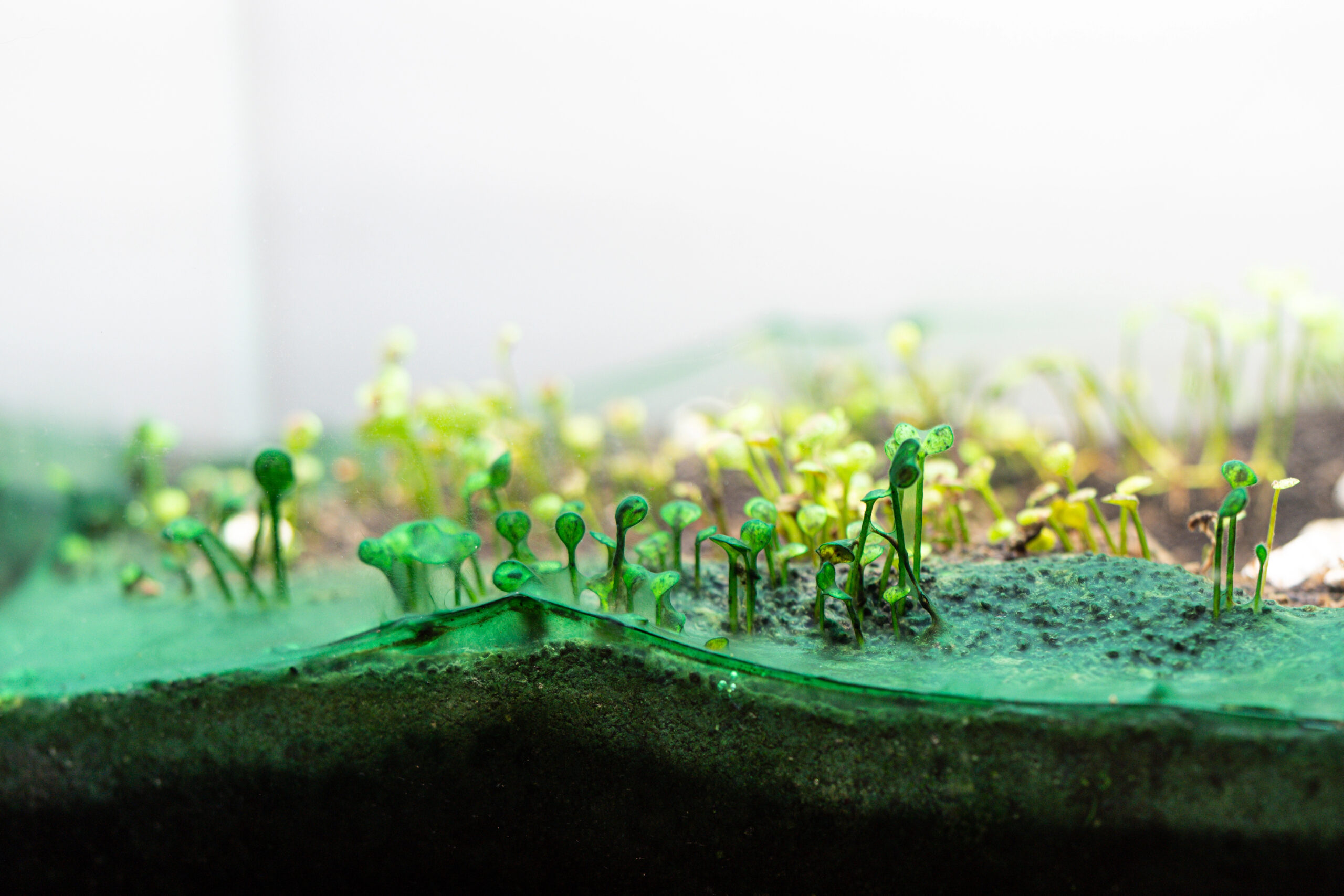
What It Looks Like
Slimy sheets or mats that range from blue-green to dark green, black, or even reddish. It often forms along the substrate, in corners, or in low-flow areas and can peel away in sheets with a siphon.
Watch: Blue-green algae forms sheets across substrate and plants. This video shows what it looks like and how manual removal paired with targeted treatment is often used.
Why It Shows Up
Cyanobacteria thrives in areas with low circulation, excess nutrients, and stagnant conditions. It commonly appears where debris accumulates, flow is weak, or oxygen exchange is limited.
Cyanobacteria is a photosynthetic bacteria rather than a true algae. It exploits environments where competition from plants and beneficial bacteria is reduced, allowing it to spread rapidly across surfaces.
What Works Best
- Improving circulation and eliminating dead zones
- Manually removing visible mats during water changes
- Reducing excess nutrients through controlled feeding
- Increasing oxygenation and surface agitation
What Makes It Worse
- Treating it like standard algae without improving flow
- Ignoring localized problem areas
- Allowing organic debris to accumulate
- Overusing broad chemical treatments without correcting conditions
Beginner-Safe Fix
Begin with physical removal and flow improvement. Siphon out affected areas during water changes, ensure water movement reaches problem zones, and avoid overfeeding.
Advanced Hobbyist Notes
Cyanobacteria responds to environmental correction first, treatment second. Experienced aquarists focus on circulation, oxygen levels, and nutrient management before considering targeted treatments.
When used, treatments are most effective when paired with mechanical removal and system corrections to prevent rapid recurrence.
More Algae Types & Common Confusions
Some algae look very similar at first glance, and not all types are covered in the quick reference above. If you’re seeing growth that doesn’t quite match the common types listed here — or you want clear visual examples of 13 aquarium algae types, including those often confused with others — check out our extended algae guide.
4 Reasons Algae Appears Even In “Perfect” Tanks
Seeing algae doesn’t mean something has gone wrong. In many cases, it means the tank is responding normally to changes in light, nutrients, or biological activity, even when maintenance is consistent and parameters look good on paper.
Experienced hobbyists expect algae to appear from time to time because aquariums are living systems, not static displays. Understanding why algae appears makes it easier to address the cause without chasing symptoms.
1. Light vs Nutrient Imbalance (The Most Common Cause)
An imbalance between available light and available nutrients most often drives algae growth. When light outpaces what plants or beneficial organisms can use, algae fills the gap.

This doesn’t mean there are “too many nutrients” or “too much light” in absolute terms. It means the two are out of sync. Even clean tanks with stable parameters can experience algae if the balance shifts slightly.
2. New Tank Algae vs Mature Tank Algae
Algae behave differently depending on a tank’s maturity.
In new tanks, algae often appears because biological filtration and plant growth haven’t fully established yet. Nutrients are available, but there aren’t enough competitors to use them efficiently.
In mature tanks, algae usually signals a recent change rather than a fundamental problem. Lighting adjustments, new livestock, altered feeding, or maintenance changes can all temporarily shift the balance.
New Tank Algae Phases
- Week 1–4: Diatoms and dust algae
- Month 1–3: Green dust or green water
- Established tank: Occasional outbreaks after changes
3. Why Algae Appears After Upgrades Or Changes
Algae commonly shows up after:
- New lighting fixtures or bulbs
- Filter upgrades or deep cleanings
- Substrate changes
- New plants or livestock

These changes don’t harm the tank, but they reset parts of the system. Algae responds quickly to these shifts, often before plants or beneficial bacteria can adapt.
This is why algae outbreaks frequently follow improvements, not neglect.
4. Why Algae Can Appear Even With Weekly Maintenance
Consistent maintenance is essential, but it doesn’t eliminate algae entirely. Weekly water changes and cleaning help control buildup, but they don’t prevent temporary imbalances caused by growth cycles, feeding changes, or environmental shifts.

In some cases, aggressive or overly frequent cleaning can actually slow stabilization by disrupting beneficial organisms. Long-term clarity comes from balance and consistency, not constant intervention.
Green, Brown, & Blue-Green Algae: What The Color Tells You
Color is often the first thing people notice when algae appears in an aquarium. While color alone can’t identify a specific algae type or determine treatment, it can provide useful context about lighting, tank maturity, and overall system conditions.
- Green algae: The most common group in freshwater aquariums, often appearing when light is sufficient but nutrients or plant uptake are out of balance. Because it shows up in many forms, proper identification still matters.
- Brown algae: Most often diatoms, typically appearing in new or recently adjusted tanks. It’s commonly linked to tank maturity and available silicates rather than poor maintenance.
- Red algae: A biological category rather than a visual one in freshwater tanks. Common problem algae, like black beard algae and staghorn algae, are red algae and usually require targeted treatment rather than resolving on their own.
- Blue-green “algae”: Not true algae but a photosynthetic bacterium known as cyanobacteria. Its presence often points to localized issues such as low flow, stagnant areas, or excess nutrients.
Filamentous Algae Is About Shape, Not Color
Hair algae, fuzz algae, and blanket weed are all filamentous algae, meaning they grow in strands or threads rather than films or sheets. They’re usually green, but their behavior and treatment can differ significantly.
Because these algae are often confused with one another, correct identification matters more than color alone. If you’re unsure what you’re seeing, a closer visual comparison can prevent mistreatment.
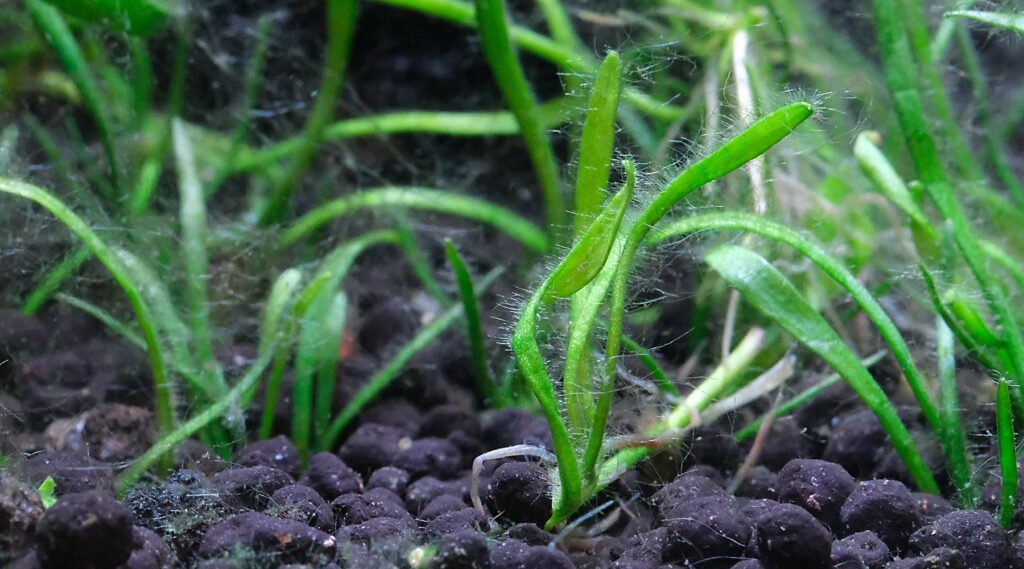
Algae Growth Basics: Planted vs Unplanted Tanks
Algae doesn’t behave the same way in every aquarium. Tank design, plant mass, and nutrient uptake all influence how easily algae appears and how quickly it returns. Understanding these differences helps you prevent algae long before it becomes a problem.
Do Planted Tanks Get More or Less Algae?
Planted tanks often experience algae early on, especially during setup, but they tend to become more stable over time than unplanted tanks. Live plants compete directly with algae for nutrients and help smooth out slight imbalances as the system matures.
In contrast, unplanted tanks rely almost entirely on filtration and water changes to manage nutrients. Without plants acting as a biological buffer, algae can take advantage of excess nutrients more quickly when conditions drift.
Planted tanks are not algae-proof, but once established, they often recover faster and tolerate minor mistakes better than bare or artificial setups. This is why experienced aquarists often aim to build toward a self-regulating system rather than fighting algae reactively.
| Planted Tank | Unplanted Tank |
|---|---|
| Plants absorbing nutrients | Nutrients lingering in water |
| Fewer algae patches | Algae on glass or decor |
| Subtle arrows showing nutrient uptake | Heavier reliance on filtration |
| Calm, balanced look |
4 Reasons Why Heavily Planted Tanks Often Stabilize Faster
Once plants are established, planted tanks are generally less error-prone than bare or artificial setups.
- Plants absorb nutrients algae would otherwise use. Nitrates and phosphates are taken up continuously, reducing nutrient spikes that algae exploits.
- Oxygenation supports beneficial bacteria. Healthy plant growth improves oxygen levels, strengthening biological filtration and overall system stability.
- Plant mass reduces excess light exposure. Leaves create shade and break up direct light, limiting algae’s ability to dominate exposed surfaces.
- Nutrient uptake becomes more predictable. Established plants create steady demand, leaving fewer gaps where algae can gain an advantage.
This doesn’t mean planted tanks are algae-proof, but it does mean algae pressure tends to drop as the system matures.
5 Algae Prevention Tips For Planted Tanks
Planted tanks reduce algae best when fundamentals are handled correctly from the start.
- Plant heavy from day one. More plant mass early helps absorb nutrients before algae can establish.
- Balance light, CO₂, and nutrients. More light requires more carbon and nutrients. Less light requires less of both. Imbalance, not quantity, is what fuels algae.
- Increase lighting gradually. Plants need time to adapt. Sudden increases in intensity or duration favor algae before plants can respond.
- Use cleanup crews as support, not solutions. Algae eaters help manage buildup but cannot correct imbalance on their own.
- Avoid overfeeding. Uneaten food becomes excess nutrients algae uses faster than plants.
What About Unplanted Or Artificial Tanks?
Unplanted tanks can be simpler to set up and maintain, but they are generally less forgiving when conditions drift. Without live plants to absorb nutrients, algae responds more quickly to overfeeding, lighting mistakes, or inconsistent maintenance.
These tanks can remain clear long-term, but algae prevention depends more heavily on stable lighting, controlled feeding, strong filtration, and consistent water changes.
The Takeaway
Planted tanks don’t eliminate algae, but they reduce opportunity. As plant mass increases and balance improves, algae has fewer chances to take hold. Unplanted tanks can succeed as well, but they require tighter control of inputs and fewer mistakes.
Long-term algae control is less about fighting growth and more about building a system that doesn’t leave algae room to grow.
If you’re interested in using plants to reduce algae pressure over time, choosing the right beginner-friendly species and understanding how balanced systems work can make a measurable difference.
The Fix: Targeted Algae Control That Actually Works
Once you’ve identified the algae and understood why it appeared, the goal shifts from removal to regaining balance.
Effective algae control isn’t about eliminating algae entirely. It’s about adjusting light, nutrients, and maintenance in a way that restores stability without harming fish, plants, or beneficial bacteria.
This section focuses on system-level corrections that work across algae types, with guidance on when to intervene and when restraint is the better choice.
| Algae Severity | Visual Impact | Recommended Action |
|---|---|---|
| Mild | Cosmetic film or dust | Maintain routine, stabilize light |
| Moderate | Persistent surface growth | Adjust light or nutrients, manual removal |
| Severe | Thick growth or green water | Targeted intervention, temporary strategy |
Lighting Adjustments (Without Harming Plants)
Lighting is one of the fastest ways to trigger algae, but also one of the easiest areas to overcorrect. The goal isn’t to dim the tank into submission. It’s to bring light back into alignment with what plants can realistically use.
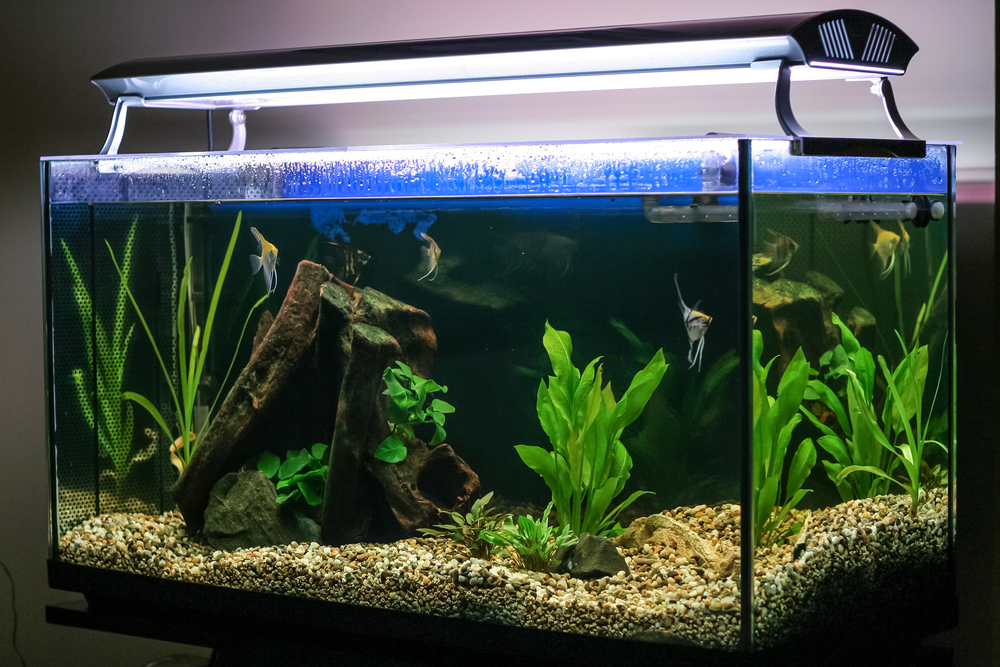
Most freshwater aquariums do best with a lighting period of 8 to 10 hours per day. Longer photoperiods don’t provide additional benefit to plants once their light needs are met, but they do give algae more opportunity to grow.
If algae appears, it’s usually more effective to shorten the photoperiod slightly before reducing intensity, and to keep the schedule consistent day to day rather than making frequent changes. Stability matters more than precision.
What Helps
- Keeping a consistent light schedule (ideally on a timer)
- Adjusting duration before intensity
- Making one change at a time and observing results
What Hurts
- Drastically cutting light in response to algae
- Frequently changing timing or brightness
- Increasing light to “push plants through” an algae phase
Well-lit tanks can still be algae-free when light, nutrients, and plant growth are in balance. Reducing light should correct excess, not create a new limitation.
Comparison Chart: Light Reduction vs Nutrient Reduction
Most tanks respond best to small adjustments in both, not extremes in one.
| Treatment | Pros | Cons |
|---|---|---|
| Light reduction | Faster visual impact | Risks plant slowdown if overdone |
| Nutrient reduction | More stable long-term | Slower visible change |
Nutrient Control (Without Starving Fish Or Plants)
Algae isn’t driven by nutrients alone, but by nutrients being available faster than plants and beneficial bacteria can use them. The goal of nutrient control is not elimination, but steady uptake and export.

Monitoring nitrate and phosphate levels can help confirm what’s happening in the system, especially if algae persists. Consistent water changes remain one of the most effective ways to prevent nutrients from accumulating faster than they’re consumed.
Rather than reacting to individual test results, focus on trends over time. Stable readings paired with healthy plant growth are more meaningful than chasing a specific number.
What Helps
- Consistent feeding routines matched to stocking levels
- Regular, moderate water changes (view our favorite water changers)
- Matching fertilization to plant mass
What Hurts
- Cutting feeding suddenly in response to algae
- Eliminating fertilization entirely
- Treating nutrients as the enemy
Starving a tank often weakens plants before it starves algae, creating more opportunity for growth rather than less.
Manual Removal: When It Helps vs When It Hurts
Manual removal can be useful, but timing matters.
Helpful When
- Removing thick growth to reduce biomass
- Clearing surfaces before targeted treatment
- Preventing shading or flow blockage
Harmful When
- Scrubbing daily without addressing causes
- Constantly disturbing surfaces during stabilization
- Treating removal as the primary solution
Manual removal should support correction, not replace it.
Filtration Upgrades By Tank Size
Filtration helps control algae indirectly by improving nutrient processing and water clarity. The right upgrade depends on tank size and bioload.
General Guidance
- Small tanks benefit from gentle, consistent flow
- Medium tanks often improve with increased biological media
- Larger tanks benefit from redundancy and even circulation
Upgrading filtration often triggers short-term algae as the system rebalances. This is normal and temporary.
Water Change Strategy By Algae Severity
Water changes are a stabilizing tool, not a cure. Their role is to control nutrient accumulation and support system balance, not to chase visual clarity.
For light algae issues, consistency matters more than volume. Routine water changes help prevent nutrients from building faster than plants and beneficial bacteria can use them.
More moderate to severe outbreaks may benefit from a temporary increase in water change frequency or volume, followed by a return to normal maintenance once conditions stabilize. These increases should be deliberate and short-term.
Avoid daily or aggressive water changes unless fish health is at risk. Overuse can destabilize the system and slow long-term recovery rather than speed it up.
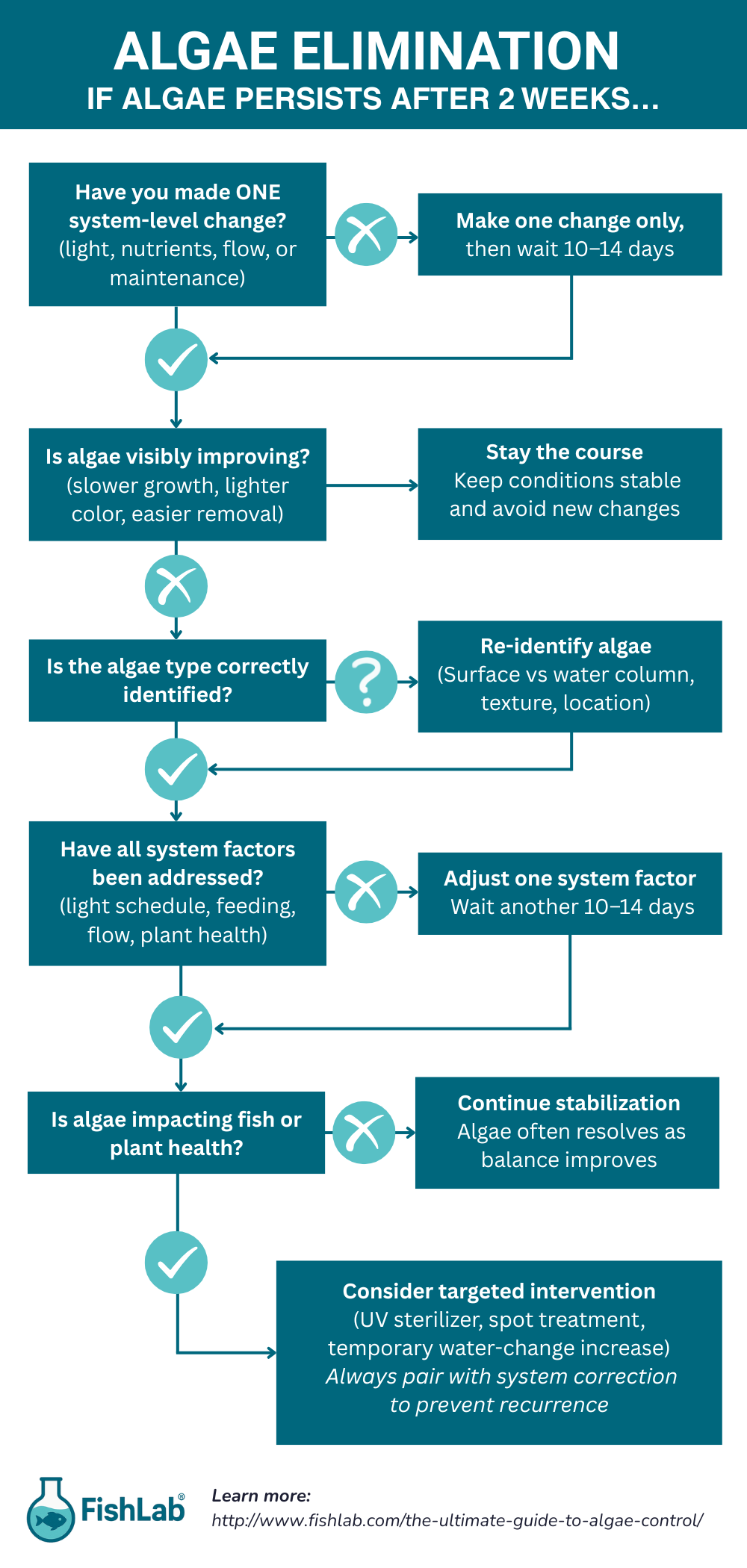
Flow Chart: If Algae Persists After 2 Weeks…
Algae Eaters: Helpful, Overrated, Or Risky?
Algae eaters can be useful, but they’re often misunderstood. The right species can help manage specific algae types under the right conditions. The wrong choice can increase bioload, create compatibility issues, or worsen algae problems.
Think of algae eaters as supporting characters, not solutions. They work best when the system is already moving toward balance.
What Algae Eaters Actually Do (And Don’t Do)
Algae eaters graze continuously on surfaces, helping reduce visible buildup between maintenance sessions. In established tanks, they can support long-term stability by slowing regrowth once corrective steps are already in place.
They are most effective after lighting, nutrients, and flow have been addressed.
What They Don’t Do
Algae eaters remove symptoms, not causes. If light, nutrients, or flow remain out of balance, algae will grow faster than any cleanup crew can keep up.
Relying on algae eaters alone often leads to:
- Persistent algae despite “cleaners”
- Overfeeding to keep them alive
- Increased bioload and nutrient load
Rule of thumb: If algae control requires adding livestock, the system isn’t ready yet.
Important Considerations Before Adding Algae Eaters
Algae eaters add living organisms to the system, not just cleaning power. Before introducing any species, it’s important to understand how their behavior, needs, and waste output interact with an already stressed or stabilizing tank.
These considerations help prevent well-intentioned additions from creating new imbalances.
Before You Add Algae-Eating Fish
- Most species only consume specific algae types
- Many reduce grazing once other food is available
- Adult size and waste output are often underestimated
- Adding fish to fix algae can increase bioload and make the problem worse
Before You Add Algae-Eating Invertebrates
- Sensitive to unstable water conditions
- Can starve in very clean or newly adjusted tanks
- Not all species are plant-safe
- Effectiveness depends on long-term system stability
3 Fish That Actually Help (With Limits)
Some fish do consume algae consistently, but only under the right conditions. These species are best viewed as maintenance support in established tanks, not corrective tools for active outbreaks.
1. Otocinclus (Otos)
Otocinclus are gentle, small-bodied fish that specialize in soft green algae and brown diatoms, especially on glass and plant leaves. They are most effective in planted aquariums where algae growth is light but persistent.
Watch: Results after four days of Otocinclus grazing in a 7-gallon tank.
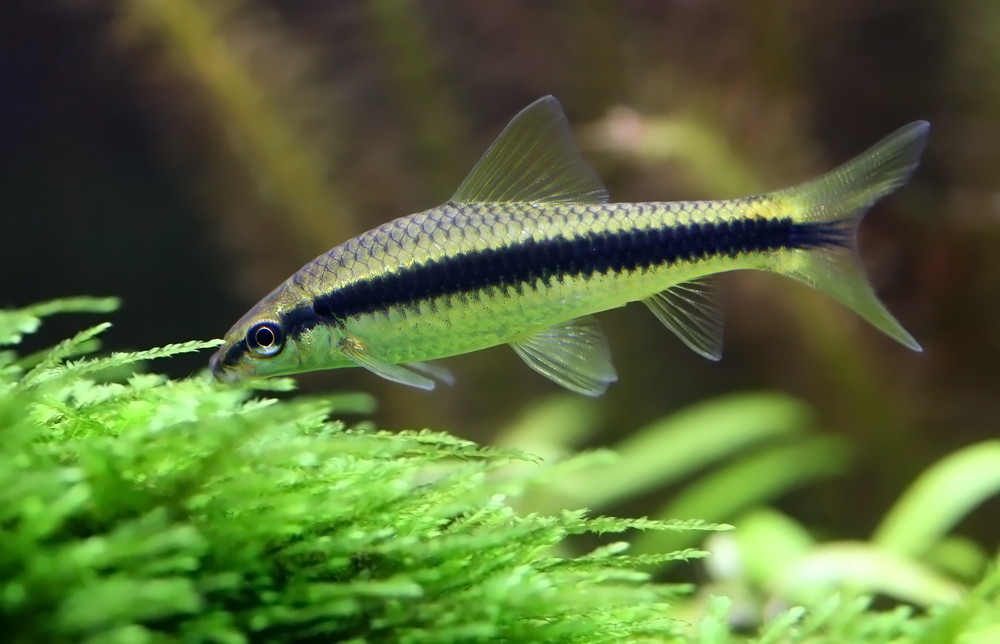
2. Siamese Algae Eater
Siamese algae eaters are one of the few fish known to consume hair algae and some black beard algae, particularly when young. They are active swimmers and require larger aquariums with plenty of space.
Watch: Results of overnight grazing on hair algae.
3. Bristlenose Pleco
Bristlenose plecos are reliable grazers that focus on soft green algae and brown algae on hard surfaces, glass, and decor. They are smaller and more manageable than common plecos, making them a popular choice for community tanks.
Watch: This video shows the results of a bristlenose pleco grazing on hair algae.
2 Invertebrates For Long-Term Algae Control
Invertebrates often outperform fish when it comes to consistent, low-impact algae grazing. With a smaller bioload and fewer compatibility issues, they are especially effective in stable tanks where algae pressure is already declining.
1. Amano Shrimp
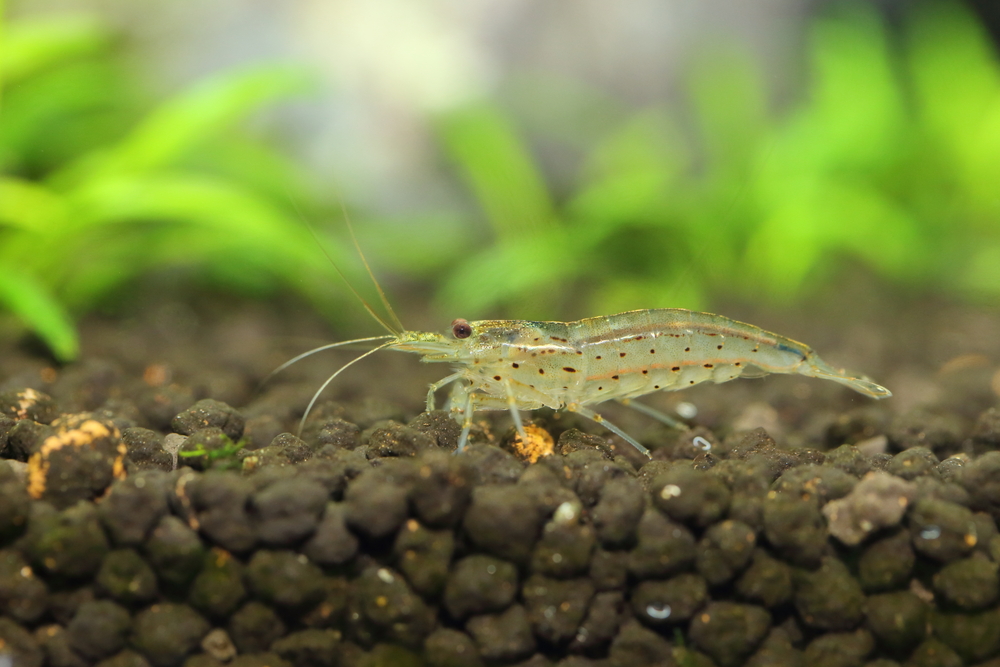
Amano shrimp are among the most effective algae-eating invertebrates, known for their constant grazing behavior. They excel at controlling soft green algae, diatoms, and hair algae, particularly in planted tanks.
Amano shrimp may also pick at stubborn black beard or staghorn algae once it begins to die back, functioning as a post-treatment clean-up crew.
Watch: Amano shrimp munching on soft algae.
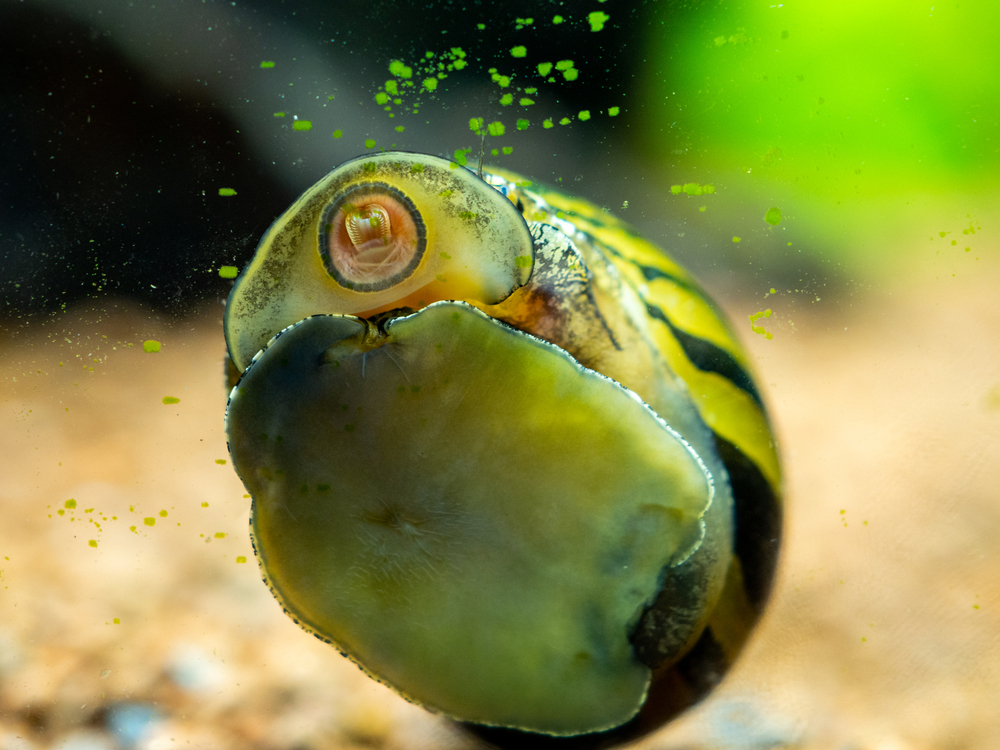
2. Nerite Snails
Nerite snails are excellent for keeping surfaces clean, especially glass. They are methodical grazers that target green spot algae, soft film algae, and brown algae.
One advantage of nerite snails is that they do not reproduce in freshwater, making population control simple.
Watch: Nerite snails are one of the few algae eaters that reliably graze green spot algae, a tough buildup that usually requires manual scraping.
4 Chemical & Advanced Algae Treatments
Think of these methods as precision tools, not broad fixes. Used thoughtfully, they can help regain control. Used carelessly, they often create new problems.
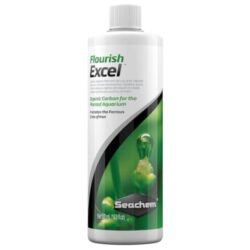
1. Liquid Carbon
Liquid carbon products are commonly used to suppress certain algae, particularly black beard and staghorn algae. Their effectiveness comes from localized carbon availability and mild algicidal action.
When It Helps
- Persistent BBA or staghorn algae
- Planted tanks with otherwise stable parameters
- Spot treatment on affected surfaces
How To Apply It
- Turn off your filter before treating.
- Use a pipette or syringe to apply a small drop directly onto the algae, staying close to the manufacturer’s recommended daily dose for your tank volume.
- A typical approach is to apply the tank’s daily dose directly to affected spots, rather than adding it to the water column.
Important Limits
- Can stress sensitive plants
- Not a replacement for proper CO₂ or nutrient balance
- Overuse can harm invertebrates
Liquid carbon works best as a targeted, short-term aid, not a continuous dosing strategy.
2. Hydrogen Peroxide
Hydrogen peroxide is a powerful oxidizer that can quickly damage algae on contact. It should be used only as a spot treatment and only when algae is localized and clearly identified.

When It Helps
- Localized BBA, staghorn, or cyanobacteria
- Hardscape or decor that can be treated directly
How To Apply It
- Turn off your filter so the peroxide stays on the algae
- Use a pipette or syringe to apply a minimal amount onto the algae patch
- A common hobby starting point is around 0.5–1 mL of 3% peroxide per 10 gallons when used as a spot application
Use With Care
- Dose conservatively
- Avoid delicate plants like Vallisneria, mosses, and liverworts
- Avoid repeated treatments in short intervals
This method is effective but unforgiving. Precision matters more than strength.
3. Algaecides (Last Resort)
Commercial algaecides can clear algae quickly, but they rarely address the cause. In many cases, algae returns once treatment stops.
Risks To Understand
- Can stress or kill plants
- May harm invertebrates and beneficial bacteria
- Sudden algae die-off can impact oxygen levels
Algaecides should be reserved for specific situations, such as severe outbreaks threatening livestock, and only after system corrections are in place.
4. UV Sterilizers
UV sterilizers are one of the most effective tools for green water algae and suspended algae in the water column. They work by killing algae cells as water passes through the unit.
Where UV Excels
- Green water blooms
- Tanks with recurring water-column algae
- Systems where clarity matters visually
What UV Does Not Fix
- Surface algae
- Nutrient imbalance
- Poor maintenance practices
UV sterilizers improve clarity, not balance. They are best viewed as a supporting tool, not a solution.
Combination Treatment Strategies (Expert-Level)
Some algae do not respond to single adjustments. Effective combination treatments work because each step reinforces the others, rather than escalating force.
These approaches are best used deliberately, for short periods, and only after basic balance issues have been addressed.
Black Beard Algae: Light Reduction + Spot Treatment
Black beard algae is slow-growing, resilient, and closely tied to light imbalance and inconsistent carbon availability. Once established, it rarely resolves without direct intervention.
Effective Combination Approach
- Reduce photoperiod or light intensity
- Spot treat affected areas with liquid carbon or hydrogen peroxide
- Wait 2-3 days and repeat spot treatment as needed
This approach weakens the algae while minimizing stress to plants and livestock. Spot treatment should be precise and temporary, not routine.
Watch: Targeted hydrogen peroxide spot treatment paired with light reduction to control black beard algae.
Staghorn Algae: Light Reduction + Manual Removal + Large Water Change
Staghorn algae often appears after fertilization swings, sudden light changes, or elevated organics. It tends to spread quickly but responds well once conditions stabilize.
Effective Combination Approach
- Block ambient or direct sunlight
- Reduce tank light intensity
- Manual removal of visible growth
- Large water change (up to 50%)
Watch: Manual removal and environmental adjustments successfully reducing staghorn algae.
Cyanobacteria: Targeted Treatment + Flow & Oxygen Correction
Cyanobacteria, often called blue-green algae, is not algae at all, but photosynthetic bacteria. It behaves differently from true algae and often spreads rapidly once established.
Because cyanobacteria thrives in low-flow, low-oxygen, and nutrient-imbalanced environments, it rarely resolves with light adjustments alone.
Effective Combination Approach
- Manual removal
- Targeted cyanobacteria treatment to halt active growth
- Increase flow in affected areas to prevent stagnation
- Improve surface agitation and oxygenation
This combination works by disrupting the conditions cyanobacteria depends on, rather than repeatedly “killing” visible growth.
Unlike most algae, cyanobacteria can release toxins as it breaks down. Prompt removal of dying mats and a follow-up water change help reduce stress on fish and plants.
Important reminder: Combination treatments work best when they are deliberate and temporary. If multiple interventions are required repeatedly, it’s a sign that system balance hasn’t been restored yet.
6 Common Algae Mistakes That Make The Problem Worse
Most persistent algae problems aren’t caused by what’s missing, but by well-intentioned habits that quietly work against balance.
If algae keeps coming back, double-check that none of these are happening.
- Constantly changing multiple variables at once. Adjusting light, nutrients, filtration, and maintenance simultaneously makes it impossible to see what’s actually working.
- Overcleaning the tank. Scrubbing glass daily, deep-cleaning substrate, or frequently rinsing filter media resets biological progress and encourages regrowth rather than resolution.
- Chasing test numbers instead of trends. Reacting to single test results often leads to overcorrection. Long-term patterns matter far more than hitting a specific number.
- Adding livestock to fix algae. Algae eaters added prematurely increase bioload and nutrient input. This often exacerbates the problem rather than solving it.
- Using chemicals without correcting the cause. Chemical treatments may temporarily clear algae, but without system correction, regrowth is almost guaranteed.
- Expecting instant results. Most algae improvements are gradual. Rapid fixes are the exception, not the rule.
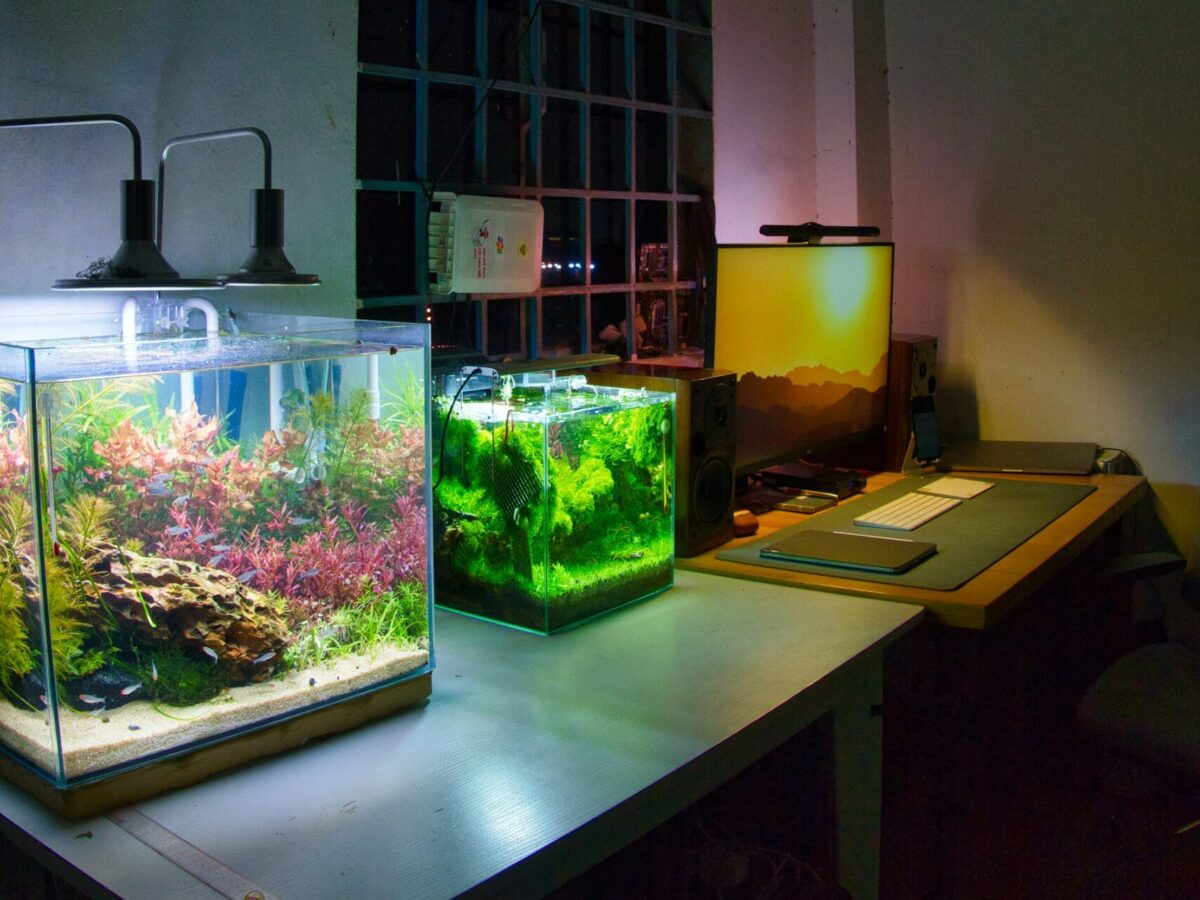
5-Part Long-Term Algae Prevention Checklist
Once algae is under control, prevention becomes much easier than treatment. The goal is to maintain conditions where algae struggles to gain a foothold. Use this checklist as a stability guide, not a rigid routine.
1. Lighting
- Consistent photoperiod
- Duration matched to plant needs, not maximum brightness
- Changes made slowly and deliberately
2. Nutrients
- Feeding matched to stocking level
- Fertilization scaled to plant mass
- Nutrient trends monitored, not micromanaged
3. Maintenance
- Regular, moderate water changes
- Filter maintenance that preserves beneficial bacteria
- Substrate cleaning without deep disruption
4. Flow & Filtration
- Adequate circulation in all areas of the tank
- Filter capacity matched to tank size and bioload
- Dead spots addressed proactively
5. Observation
- Algae type identified early
- Changes evaluated over 10–14 day intervals
- Adjustments made one at a time
Stable tanks don’t eliminate algae entirely. They keep it predictable, manageable, and slow-growing.
Frequently Asked Questions
Algae control often comes with conflicting advice. These answers focus on what actually works long term, without overcorrecting or putting fish and plants at risk.
Don’t see your question? Respond in the comments, and we’ll get back to you!
What Are Effective Natural Methods For Controlling Algae In A Fish Tank?
Natural control methods focus on competition and balance, not elimination. Healthy plant growth helps absorb nutrients that algae would otherwise use, while stable lighting and feeding routines reduce excess input.
Algae-eating fish and invertebrates can help manage specific algae types, but they work best as supporting tools, not standalone solutions.
How Can I Maintain A Crystal Clear Aquarium Using Chemical Filtration Media?
Chemical filtration media, like activated carbon, can improve water clarity by removing dissolved organic compounds and discoloration. This can make water appear clearer, especially after disturbances or treatment.
However, chemical media does not correct the underlying causes of algae and should be viewed as a clarity aid, not a long-term algae control strategy.
What Are The Best Practices For Keeping Fish Tank Water Clean Without Regular Changes?
Regular maintenance is essential for clean water without frequent changes.
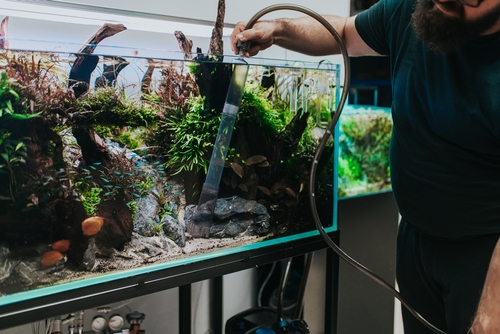
Monitor feeding habits to avoid overfeeding, and promptly remove uneaten food. Additionally, using a gravel vacuum helps clean the substrate, preventing waste buildup and maintaining water quality.
How Often Should Algae Control Products Be Used In An Aquarium Without Harming Fish?
Algae control products should be used sparingly to avoid harming fish. It’s typically recommended to apply them once every few weeks, depending on tank conditions and the specific product.
Always follow the manufacturer’s instructions closely to ensure safe use.
What Strategies Help Keep Aquarium Glass Free From Algae Buildup?
To keep aquarium glass free from algae, regular cleaning with a magnet cleaner or algae pad is essential. Limiting light exposure and maintaining balanced nutrient levels also help prevent algae from growing on the glass, keeping the tank clear.
Can A Fish Tank Maintain Clear Water Without The Use Of A Mechanical Filter, And If So, How?
It is possible in heavily planted or specialized setups, where plants and beneficial bacteria handle most filtration. These systems rely on careful stocking, consistent maintenance, and patience.
For most aquariums, mechanical filtration provides stability and margin for error, making long-term clarity easier to maintain.
Keep Your Tank Clear Long-Term
Algae control doesn’t end with a single fix. Long-term success comes from understanding how lighting, nutrients, filtration, and maintenance work together over time.
If you want to go deeper, explore our guides on identifying different types of aquarium algae, building a stable maintenance routine, and avoiding common aquarium mistakes to support clear water from the start.

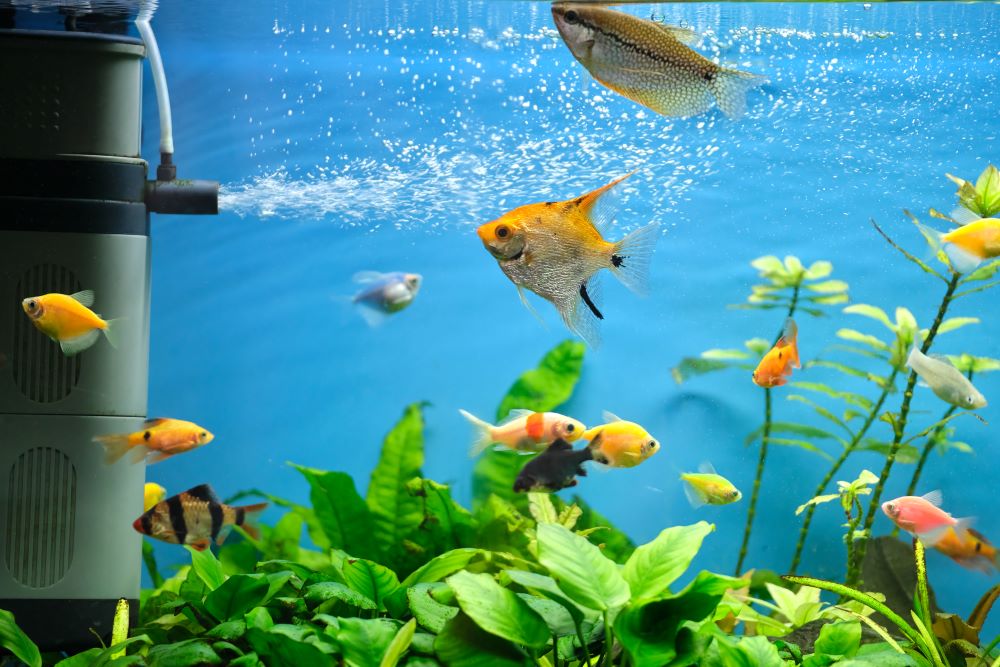

To me, a crystal clear tank implies the tank is sterile. I have always encouraged a growth of algae on the rear walls of my tank and on any driftwood I have in the tank. I do have a bristlenose pleco as well as snails in my tank but have no desire to have a sterile tank. My 20 gallon long is almost maintenance free, I feed the few Endlers I have in it every few days.
Great point, crystal clear doesn’t always mean healthy. Algae growth, especially in controlled areas like the back wall or hardscape, can benefit grazers like plecos and snails and contribute to biological stability.
Algae on the rear glass and driftwood acts like a mini pasture. It hosts biofilm and microfauna, great for a bristlenose and snails. To guide growth, keep light 6 to 8 hours, avoid big nutrient swings, and aim for a gentle flow across the back pane. Watch for problem spots like cyanobacteria (slimy with an earthy smell) or long string algae, and remove those while leaving the good film. A bit of blanched veg and real wood helps the bristlenose, too. Your 20 long with Endlers is a solid combo for this style.