When you purchase through links on our site, we may earn a commission. Here’s how it works.
Yes, your betta fish can learn tricks – real ones, like following your finger, swimming through hoops, and even (carefully) doing a tiny jump that looks way more impressive than it sounds.
Most owners never try because it feels fake, risky, or like something only YouTube fish do, but betta training is actually simple, safe, and oddly fun when you know what you’re doing.
This guide shows what bettas can learn, how to train them without stress, and which tricks are worth trying and which ones deserve a hard “maybe.”
Table of Contents
Yes, You Can Train a Betta Fish
And It’s Totally Safe
Let’s clear this up right away: betta fish can absolutely be trained. Not in a circus way, but in a real, repeatable, science-backed way that uses food and timing, not force.
Betta fish are smart. And, if your betta already gets excited at feeding time, it’s already learning.
Is Training a Betta Fish Safe?
Yes. Betta training is based on short sessions, positive rewards, and choice. You’re not pushing, chasing, or stressing the fish. If your betta swims away, loses interest, or flares aggressively, you stop.
Training should look like play, not work. If it ever feels forced, you’re doing too much.
Are You a Betta Fish Beginner? It’s crucial to create a suitable environment for them to thrive in. Keep an ideal and well-maintained betta tank that holds at least 5 gallons of water to provide adequate space for swimming and exercise.
Why Most People Think This Isn’t Possible
Most betta owners never try training because:
- Fish are assumed to be too dumb
- No one shows how simple it actually is
- The tricks look fake or staged online
But bettas are curious, food-motivated, and great at recognizing patterns. When training works, it often works fast, sometimes in just a few days. And, you don’t need special equipment, a bigger tank, or hours of time.
Quick Takeaway
- Betta fish can be trained using food and timing
- Training is safe when sessions are short and positive
- If your betta reacts to feeding time, it’s already learning
Up next: exactly what betta fish can learn and which behaviors surprise owners the most.
What Betta Fish Can Actually Learn
Most Owners Never Try This
Betta fish aren’t sitting around plotting algebra, but they are excellent at one thing: learning patterns that lead to food. That turns out to be more than enough.
With basic training, many bettas can learn to:
- Follow your finger like a tiny aquatic puppy
- Swim through hoops, rings, or improvised targets
- Come to the front of the tank when you walk by
- Associate specific movements or taps with feeding time
If this sounds fake, that’s normal. Most people assume fish just react randomly. In reality, bettas quickly figure out, “When I do this, food appears.” They are extremely motivated by that idea.
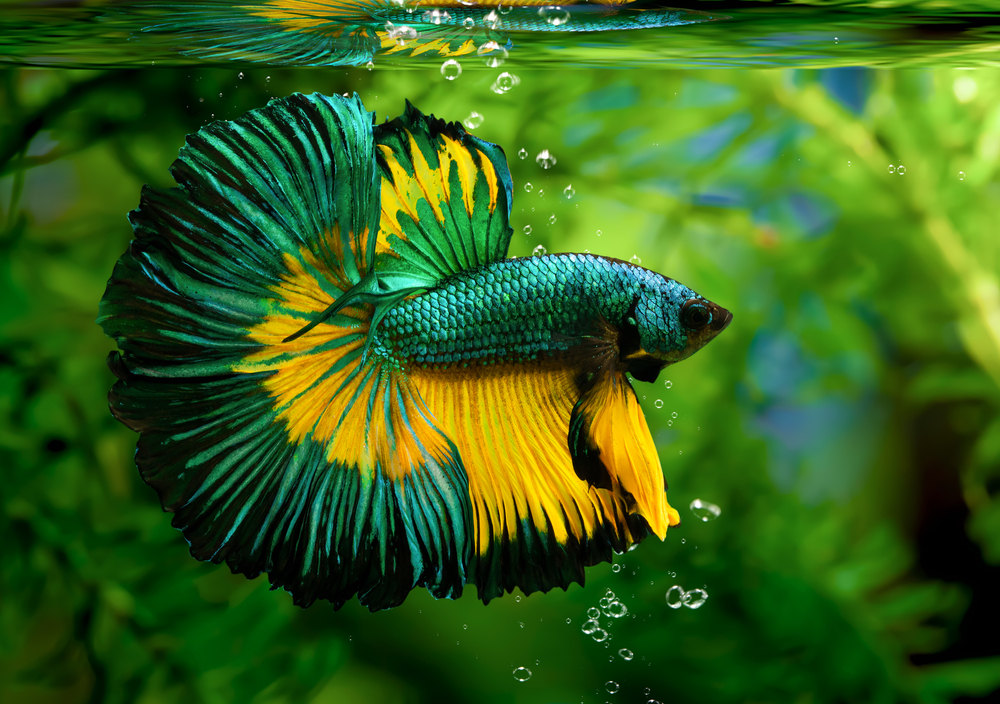
Some bettas will even:
- Learn faster than expected
- Get visibly excited when training starts
- Seem annoyed when training doesn’t start on time
No, your betta isn’t judging you. It just has a schedule now.
Why Bettas Are Weirdly Good at This
Bettas are curious, territorial, and very focused on what’s happening near the glass. Unlike schooling fish, they don’t get distracted by tankmates or group chaos. When something interesting happens, they lock in.
That focus makes them surprisingly good students, even if they still have the attention span of a goldfish. Which, to be fair, they are not.
Remember, training isn’t about perfection. It’s about interaction.
Quick Takeaway
- Bettas can learn patterns tied to food
- Finger following and simple targets are common first skills
- Curiosity and focus make bettas easier to train than most people expect
Up next: a 30-second way to tell if your betta is the “overachiever” type or the “I’ll get to it later” type.
Can Your Betta Be Trained? (30-Second Personality Check)
Before you start imagining your betta jumping through hoops, let’s do a quick reality check. Not every betta is an overachiever. Some are eager students. Some are… politely indifferent.
Answer these questions based on what your betta already does.
- Does it swim up to the glass when you approach?
- Does it get noticeably excited at feeding time?
- Does it follow movement outside the tank, even briefly?
- Does it explore new objects instead of hiding from them?
If you said “yes” to two or more, your betta is very trainable. If you said “yes” to all of them, congratulations, you may have adopted a tiny aquatic try-hard.
And, if you said “no” to most of these, don’t panic. This doesn’t mean training won’t work. It just means you’ll need shorter sessions and lower expectations. Think encouragement, not boot camp.
What This Test Actually Tells You
This isn’t about intelligence. It’s about interest. Training works best when a betta already cares about what’s happening outside the tank. Curious fish learn faster because they’re paying attention before food even shows up.
A betta that ignores you completely isn’t broken. It just hasn’t decided you’re interesting yet. Training is how you change that.
Remember that age, health, and stress matter. A young, healthy betta in a calm tank will always train faster than one that’s stressed, overfed, or dealing with poor water conditions.
Quick Takeaway
- Curiosity matters more than “intelligence”
- Food excitement is a strong training signal
- Most bettas can learn, but not all at the same speed
Up next: how to start training your betta in under two minutes, with no special tools and no guesswork.
Start Training Your Betta in 2 Minutes (Quick-Start Guide)
You don’t need special tools, a fancy setup, or a degree in fish psychology. If you have food and a finger, you’re ready. Here’s the simplest way to start betta training today:
- Pick a time when your betta is already expecting food
- Use a small amount of its regular food (no new treats yet)
- Move one finger slowly along the outside of the tank
- The moment your betta follows it, reward it with food
- Stop after 3–5 minutes, even if things are going well
That’s it. No whistles. No lasers. Just timing.
If your betta ignores you at first, don’t take it personally. Fish have moods, too. Try again later when it’s more alert or hungry. Training works best when your betta thinks it was their idea.
Why Short Sessions Matter
Long training sessions don’t speed things up. They do the opposite. Bettas learn faster with short, repeatable interactions that they can succeed at. Ending early keeps them interested for next time.
Think of training like a teaser trailer, not a full movie.
What Success Looks Like
On day one, success might just be your betta glancing at your finger. That still counts. The goal is recognition first, precision later.
If something feels boring, confusing, or frustrating, stop and try again tomorrow. Consistency beats intensity every time.
Quick Takeaway
- You can start training with food and a finger
- Keep sessions under five minutes
- Stop while your betta is still interested
Up next: how to grab your betta’s attention fast, even if it usually ignores you.
How to Get Your Betta’s Attention Fast
Before any tricks work, your betta has to care that you’re there. The good news is that this part is usually easier than people expect.
Bettas are naturally curious about movement outside the tank. You’re not teaching a trick yet; you’re just showing your fish that you are interesting.
Here’s how to do that quickly:
- Approach the tank slowly and from the front
- Move one finger along the glass at an easy, steady pace
- Keep movements smooth, not jerky
- Stop the moment your betta turns away
If your betta follows your finger for even a second, that’s a win. Attention comes before obedience.
What If Your Betta Ignores You?
This is normal, especially at first. Try again:
- Right before feeding time
- When the tank lights are on
- When the room is calm and quiet
A distracted or sleepy betta won’t engage. Timing matters more than effort here.
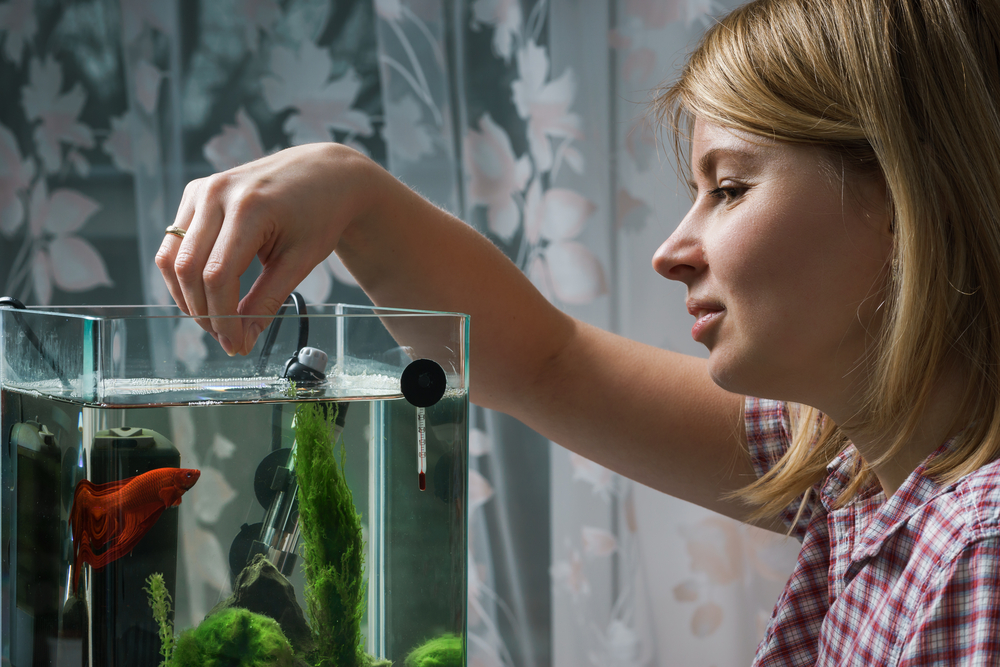
What You’re Looking For
You’re not trying to force interaction. You’re watching for:
- Eye movement toward your finger
- A short follow, even half an inch
- Curiosity instead of hiding
Once your betta starts tracking movement, training becomes much easier.
Quick Takeaway
- Attention is the foundation of all training
- Smooth, slow movements work best
- Even brief interest counts as progress
Up next: the first real trick everyone should teach; getting your betta to follow your finger on purpose.
The First Trick Everyone Should Teach: Follow Your Finger
This is the trick that makes everything else possible. Once your betta learns to follow your finger, every future trick becomes easier.
Start the same way you did in the attention exercise, but now you’re asking for something specific.
- Move your finger slowly along the glass
- The moment your betta follows it, reward it with food
- Repeat for a few short passes
- Stop while your betta is still engaged
At first, reward any attempt. A glance, a half-follow, or a single smooth turn all count. Precision comes later.
How Long This Usually Takes
Some bettas get this in one session. Others need a few days. Both are normal.
If your betta loses interest, stop. Training works best when your fish thinks it won, not when it’s tired of you.
A Common Mistake to Avoid
Moving too fast.
Fast finger movements look random and stressful to fish. Slow, predictable motion is what allows your betta to connect the movement to the reward.
Quick Takeaway
- Finger following is the foundation trick
- Reward effort first, precision later
- Slow movements work better than fast ones
Up next: the one thing that decides whether this trick sticks or falls apart completely.
The One Thing That Makes Betta Training Work
Or Completely Fail
It’s not intelligence, and it’s not the type of food. It’s not even how “hard” you try. The thing that decides whether betta training works is timing.
Bettas learn by connecting actions to rewards. If the reward comes too late, the connection never forms. If it comes too early, the fish has no idea what it did right. When the timing is right, things click fast.
This is why some people swear training doesn’t work, while others see results in days. Same fish. Different timing.
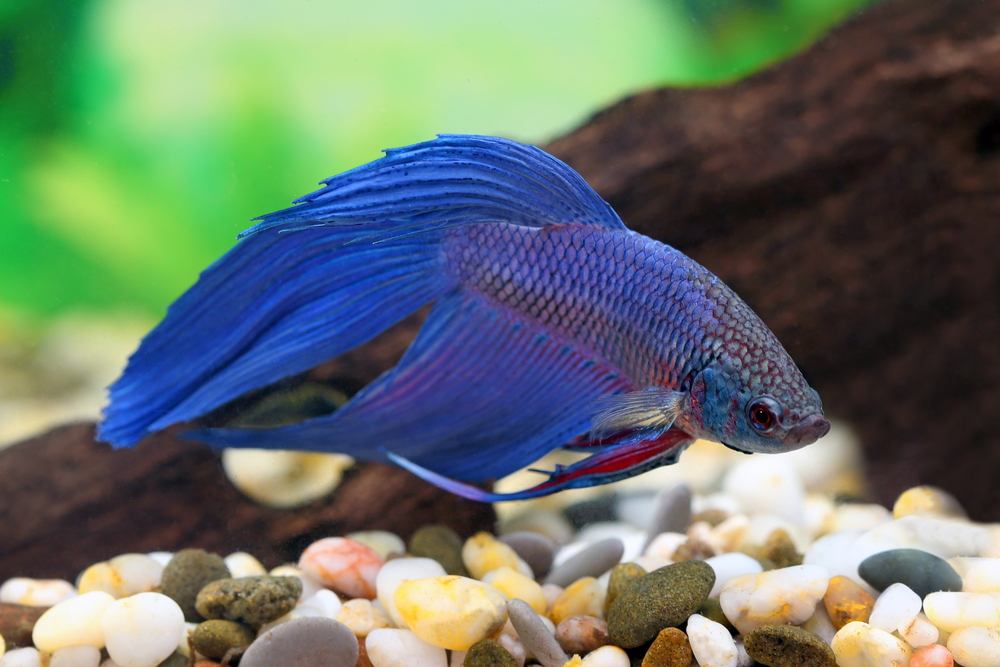
What Good Timing Looks Like
Good timing means the reward happens immediately after the behavior you want.
- Finger moves → betta follows → food appears
- Betta swims through a hoop → food appears
- Betta comes to the glass → food appears
No pause, no delay, and no “good fish” speech in between.
If you’re fumbling with food while your betta swims away, the moment is already gone. From the fish’s point of view, that food just appeared randomly.
The Most Common Timing Mistake
Waiting for perfection.
If you only reward flawless behavior, your betta gets confused and gives up. Reward small wins at first. Precision comes later.
Training is less about being strict and more about being fast.
Quick Takeaway
- Timing matters more than intelligence or effort
- Rewards must happen immediately
- Early rewards should be generous, not perfect
Up next: fun betta fish tricks that build on finger following without stressing your fish.
3 Fun Betta Fish Tricks
Once your betta reliably follows your finger, you’ve unlocked the fun part. This is where training stops feeling like “training” and starts looking like play.
1. Swimming Through Hoops or Targets
You don’t need anything fancy. A small plastic ring, a clean key ring, or even your fingers held in a circle can work.
Start by introducing the hoop into the tank and allowing your betta to get accustomed to it.
- Hold the target still at first
- Let your betta swim through on its own
- Reward immediately
- Slowly increase the distance over time
You can also use a stick or chopsticks with some food, make the fish swim through the hoop, and offer a treat as a reward.
At first, it might look accidental. That’s fine. Bettas learn by repetition, not perfection.
2. Target Touching
Some bettas love targets even more than hoops.
- Use a chopstick, pen, or feeding stick
- Hold it still near the glass
- Reward any investigation or touch
Soon, your betta will actively swim toward the target like it owes them money.
3. Simple Interactive Games
Training doesn’t have to be formal. You can turn everyday interactions into enrichment:
- Finger “races” across the tank
- Feeding from different sides of the glass
- Gentle mirror play (very short sessions only)
- Incorporating items like a ping pong ball
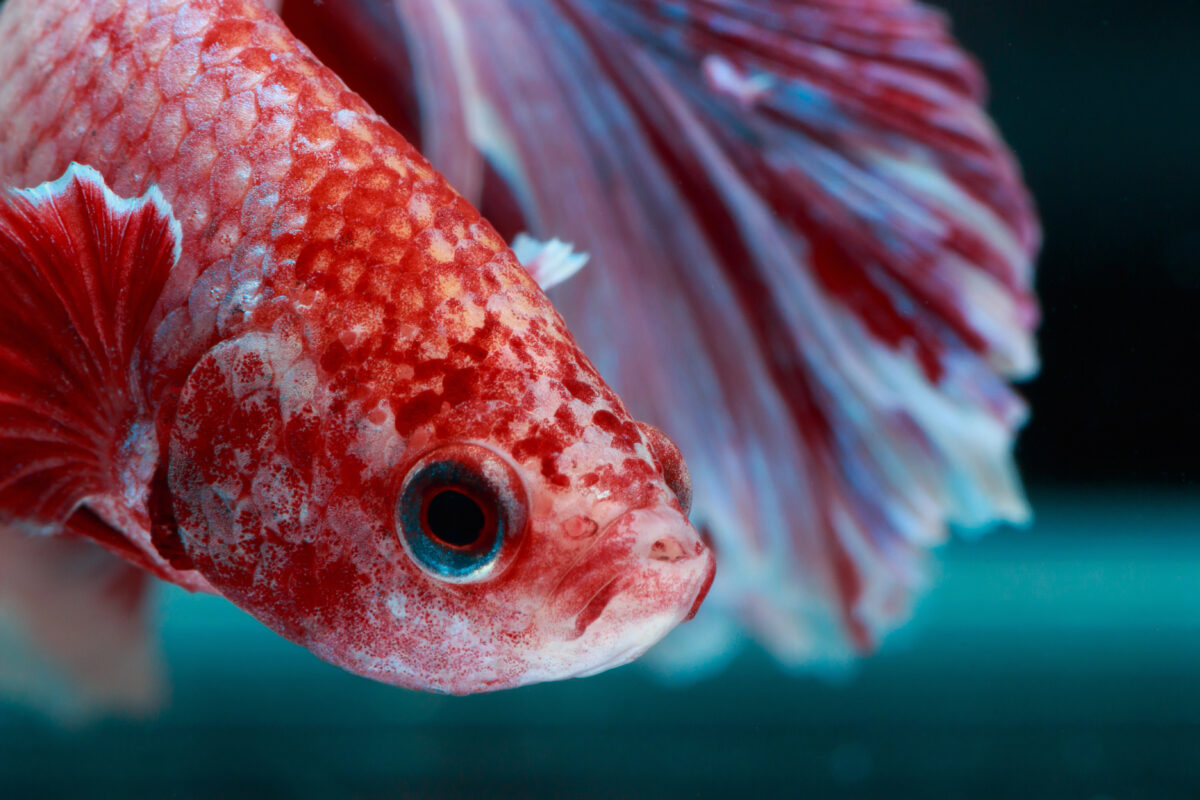
If your betta looks engaged and curious, you’re doing it right. But remember this important rule: if your betta loses interest, stop. Fun only works when the fish thinks it’s fun too.
Quick Takeaway
- Hoops and targets build on finger following
- Start simple and reward curiosity
- Training should feel like play, not work
Up next: the most controversial betta trick, jumping, and what you need to know before trying it.
Can You Train a Betta Fish to Jump? (Read This First)
Yes, some bettas can be trained to jump short distances. That doesn’t mean every betta should.
Jumping gets attention online because it looks impressive, but it also carries the highest risk if done carelessly. This is one trick where restraint matters more than results.
When Jumping Can Be Okay
Jumping should only be attempted if:
- Your betta already follows your finger reliably
- Training sessions are calm and predictable
- The jump distance is extremely short
- The water level is close to the top
The goal is a small hop, not an Olympic event.
How To Teach A Betta Fish To Jump
Bettas have a natural ability to jump, and with the proper technique, you can train them to do so on command. Here’s how:
- Hold a feeding stick with a betta food pellet above the water surface.
- Reward your betta with a pellet each time it jumps.
- Gradually increase the height to challenge and reinforce the behavior.
When to Skip This Trick Entirely
Do not attempt jump training if your betta:
- Startles easily
- Shows stress during other tricks
- It is already prone to jumping at the lid
- It is very young, old, or recovering from illness
A stressed jump is not a trick. It’s a warning sign.
The Safer Alternative
If you want the look of a jump without the risk, teach your betta to rise vertically in the water or touch a floating target. It’s safer and just as impressive to most people watching.
Quick Takeaway
- Jumping is optional, not essential
- Only attempt very short, controlled hops
- Many bettas are better off skipping this trick
Up next: want to see what these tricks actually look like? Watch a few of them in action.
Watch These Betta Fish Tricks in Action
If you want to see what betta training looks like in real life, this short video shows five simple tricks step-by-step.
Up next: how long betta training really takes, and what progress usually looks like over time.
How Long Betta Fish Training Really Takes: 3 Stages
A Realistic Timeline
This is where a lot of people quietly quit, so let’s be honest about timing.
Some bettas seem to “get it” almost immediately. Others take longer. Both are normal, and neither means you’re doing anything wrong.
Here’s what training usually looks like for most bettas.
1. The First Few Days
- Your betta starts noticing your finger or movements
- You see brief follows or turns
- Progress feels inconsistent
This stage is about recognition, not mastery.
2. Around One Week
- Finger following becomes more reliable
- Your betta approaches the glass more often
- Training feels less random
At this point, many owners realize their fish is actually paying attention.
3. Two Weeks and Beyond
- Tricks look intentional instead of accidental
- Your betta responds faster to cues
- Training becomes part of a routine
Some bettas plateau here, others keep improving. Both outcomes are fine.
What Slows Things Down
Training often takes longer if:
- Sessions are too long
- Rewards are inconsistent
- The betta is overfed or stressed
Speed comes from consistency, not intensity.
Quick Takeaway
- Most bettas show progress within days
- Reliable behavior often takes one to two weeks
- Slow progress doesn’t mean failure
Up next: how to use food, rewards, and training frequency without accidentally undoing your progress.
Feeding, Rewards, and Training Frequency
What Actually Works
Food is the engine behind betta training. Use it well, and progress feels easy. Use it poorly, and everything stalls.
The good news is you don’t need special treats or complicated schedules.
What to Use as a Reward
In most cases, your betta’s regular food works perfectly.
- Pellets or flakes it already loves
- Very small portions
- One piece at a time
The reward should be just enough to register, not enough to end the session. Think “snack,” not “meal.”
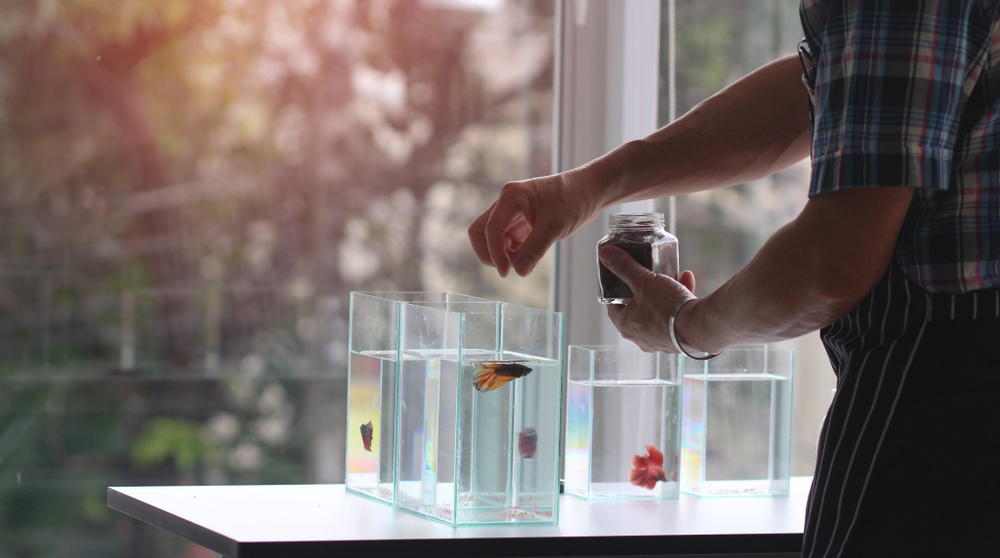
How Often to Train
Short and consistent beats long and intense.
- One to two sessions per day
- Three to five minutes per session
- Stop before your betta loses interest
Training right before normal feeding time often works best, since motivation is already high.
The Overfeeding Trap
Too much food kills motivation fast. A full betta has no reason to participate.
If training stalls, slightly reduce meal size and use those calories as rewards instead. Your betta stays healthy, and training suddenly starts working again.
Quick Takeaway
- Use small food rewards that your betta already likes
- Train briefly, once or twice a day
- Avoid overfeeding, or motivation disappears
Up next: clear signs your betta is enjoying training and when it’s time to stop.
8 Signs Your Betta Is Loving Training & When to Stop
Training should make your betta more engaged, not more stressed. Fortunately, bettas are pretty honest about how they’re feeling.
4 Signs Training Is Going Well
These are good signals that your betta is enjoying the interaction:
- Swimming toward you when you approach
- Following your finger eagerly
- Bright, consistent coloration
- Curious behavior instead of hiding
Some bettas even start “waiting” for training at their usual time. That’s a good sign, not attitude.
4 Signs You Should Pause or Stop
Stop the session if you notice:
- Rapid darting or frantic swimming
- Repeated flaring at your finger
- Hiding or sinking to the bottom
- Complete loss of interest
Stopping isn’t failure. It’s good fishkeeping.
Why Stopping Early Matters
Ending a session before stress appears keeps training positive. Bettas remember the last part of an interaction more than the first. If it ends well, they’re more likely to engage next time.
Training should leave your betta curious, not exhausted.
How to Prevent Stress & Aggression During Training
Bettas are prone to stress and aggression, especially if training sessions go on too long. Keeping things positive is mostly about paying attention and knowing when to ease off.
To prevent stress during training:
- Watch for signs of stress, such as fading color or a drop in appetite
- Give your betta regular breaks instead of pushing through a session
- Use a mirror occasionally to redirect natural aggression and allow safe flaring
- Keep interactions calm and predictable to maintain a stress-free environment
If training ever seems to increase tension instead of curiosity, it’s a sign to slow down or stop for the day. Training should leave your betta interested, not overwhelmed.
Quick Takeaway
- Curiosity and approach behavior mean training is working
- Stress signals mean it’s time to stop
- Ending early builds better long-term results
Up next: common betta training mistakes that quietly undo progress without you realizing it.
4 Common Betta Training Mistakes to Avoid
Most training problems don’t come from bad fish. They come from small, easy-to-miss mistakes that quietly undo progress.
1. Training for Too Long
Long sessions don’t create better learning. They create bored or stressed fish.
If training feels repetitive or your betta starts drifting away, the session has gone on too long. Ending early is always better than pushing through.
2. Being Inconsistent
Changing cues, speeds, or rewards from session to session confuses your betta.
Pick one signal. Use it the same way every time. Consistency is what turns random behavior into a learned response.
3. Expecting Too Much Too Fast
Bettas learn in steps. If you jump straight to complex tricks, your fish checks out.
Build one skill at a time. Finger following first, everything else later.
4. Training a Stressed Fish
Training won’t override the stress caused by poor water quality, aggressive tankmates, diseases, or sudden changes.
If your betta seems off, fix them and the environment before you try to teach anything. Better care is key.
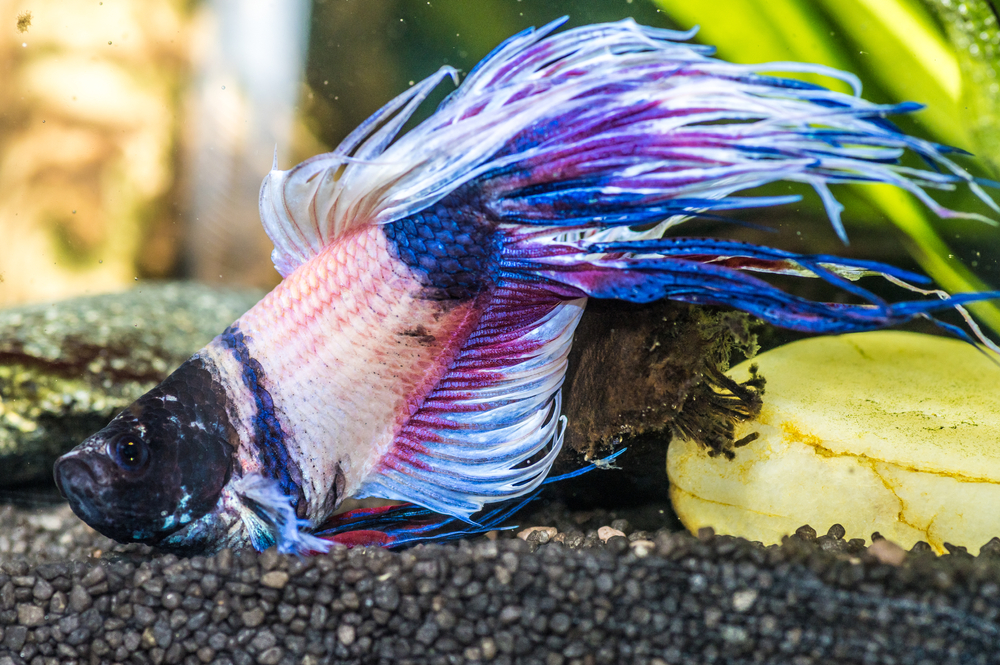
Quick Takeaway
- Short sessions beat long ones
- Consistency matters more than variety
- Progress should feel gradual, not forced
Up next: why training isn’t really about tricks and what it does for your betta instead.
Training vs Enrichment: Why Tricks Aren’t the Real Goal
By this point, it should be clear that training isn’t really about showing off tricks to guests. The tricks are just the side effect.
What you’re actually doing is enrichment.
In the wild, bettas spend their time exploring, hunting, and reacting to a changing environment. In a tank, life can get repetitive. Training adds mental stimulation and interaction that most captive fish don’t get.
What Enrichment Looks Like in Practice
Enrichment doesn’t require constant training sessions or new tricks every week. It can be simple:
- Short daily interactions
- Giving your betta something to respond to
- Letting it “solve” small problems for rewards
Training creates novelty, and novelty keeps bettas engaged.
Why This Matters More Than Tricks
A mentally stimulated betta often shows:
- More curiosity
- More interaction with you
- Less boredom-related behavior
You might notice your betta becoming more responsive even outside training sessions. That’s not a coincidence. That’s enrichment doing its job.
The Best Mindset to Have
If a trick never becomes perfect, that’s fine. If your betta never jumps or swims through hoops, that’s also fine.
And, if your betta is more alert, curious, and engaged with its environment, training has already succeeded.
Quick Takeaway
- Training is a form of enrichment, not a performance
- Mental stimulation matters as much as physical care
- A happier betta doesn’t need a long list of tricks
Up next: how training can change your betta’s behavior over time, even outside training sessions.
How Training Changes Betta Behavior Over Time
One of the most surprising parts of training a betta fish is how much it changes their behavior outside of training sessions.
Over time, many owners notice their betta becoming more engaged in general, not just when food is involved.
Common Changes Owners Notice
With consistent, low-pressure training, bettas often:
- Swim to the front of the tank more often
- Show increased curiosity about movement outside the glass
- Appear more alert and responsive
- Settle into predictable routines
These changes don’t happen overnight, but they add up.
Why This Happens
Training teaches your betta that interaction leads to positive outcomes. Instead of reacting randomly to the environment, the fish starts paying attention to patterns.
In simple terms, training gives your betta something to care about.
What This Means for You
A more engaged betta is easier to observe, easier to care for, and more interesting to interact with. You’re not just feeding a fish anymore. You’re interacting with one.
That connection is the real long-term benefit of training.
Quick Takeaway
- Training often increases overall engagement and curiosity
- Behavior changes extend beyond training sessions
- The biggest payoff is a more interactive fish
Up next: quick answers to the most common betta training questions people ask.
Frequently Asked Questions
These are the questions betta owners ask most when they start training. If you don’t see yours answered here, feel free to drop it in the comments. There’s a good chance someone else is wondering the same thing.
Can Betta Fish Learn Their Name?
Not exactly in the way dogs do, but bettas can learn to associate a specific sound or movement with food or attention. Over time, it can look a lot like name recognition.
Do Bettas Recognize Their Owners?
Yes. Bettas often recognize the person who feeds and interacts with them most. They respond to familiar movement, routines, and presence near the tank.
How Do You Get a Betta Fish to Follow Your Finger?
Start right before feeding time. Move your finger slowly along the glass and reward any attempt to follow. Consistency and timing matter more than speed.
How Can Aggression Be Reduced During Training?
Keep sessions short, calm, and predictable. If your betta flares repeatedly or seems stressed, stop and try again later. Training should reduce boredom, not increase frustration.
Do Betta Fish Like Being Talked To?
They don’t understand words, but they do respond to vibrations and consistent presence. Talking calmly near the tank can become part of a familiar routine.
How Can I Play With My Betta Fish?
Simple interaction works best. Finger following, target training, and short enrichment sessions are safer and more effective than constant stimulation or forced tricks.
Want to Go Further With Your Betta?
If training got you more interested in your betta’s behavior, choosing the best betta fish food matters more than you think. Better nutrition often means better focus and motivation during training.
A well-designed tank setup also plays a huge role, since calm, enriched environments make bettas more curious and easier to train. Understanding betta fish anatomy helps explain why certain tricks work, how bettas see movement, and what behaviors are normal versus stress-related.
And if training sparked a deeper interest, learning about betta fish breeding offers insight into natural behaviors that shape how bettas respond to routines, territory, and interaction.
Did Your Betta Surprise You? Did your fish instantly become a training prodigy… or stare at you like you’d lost your mind? Share what worked, what didn’t, and any tricks your betta decided to invent on its own in the comments. Your story might help another betta owner or at least make someone feel better about theirs.